Role
Lead Product DesignerAlso mentored designers and front-end devs
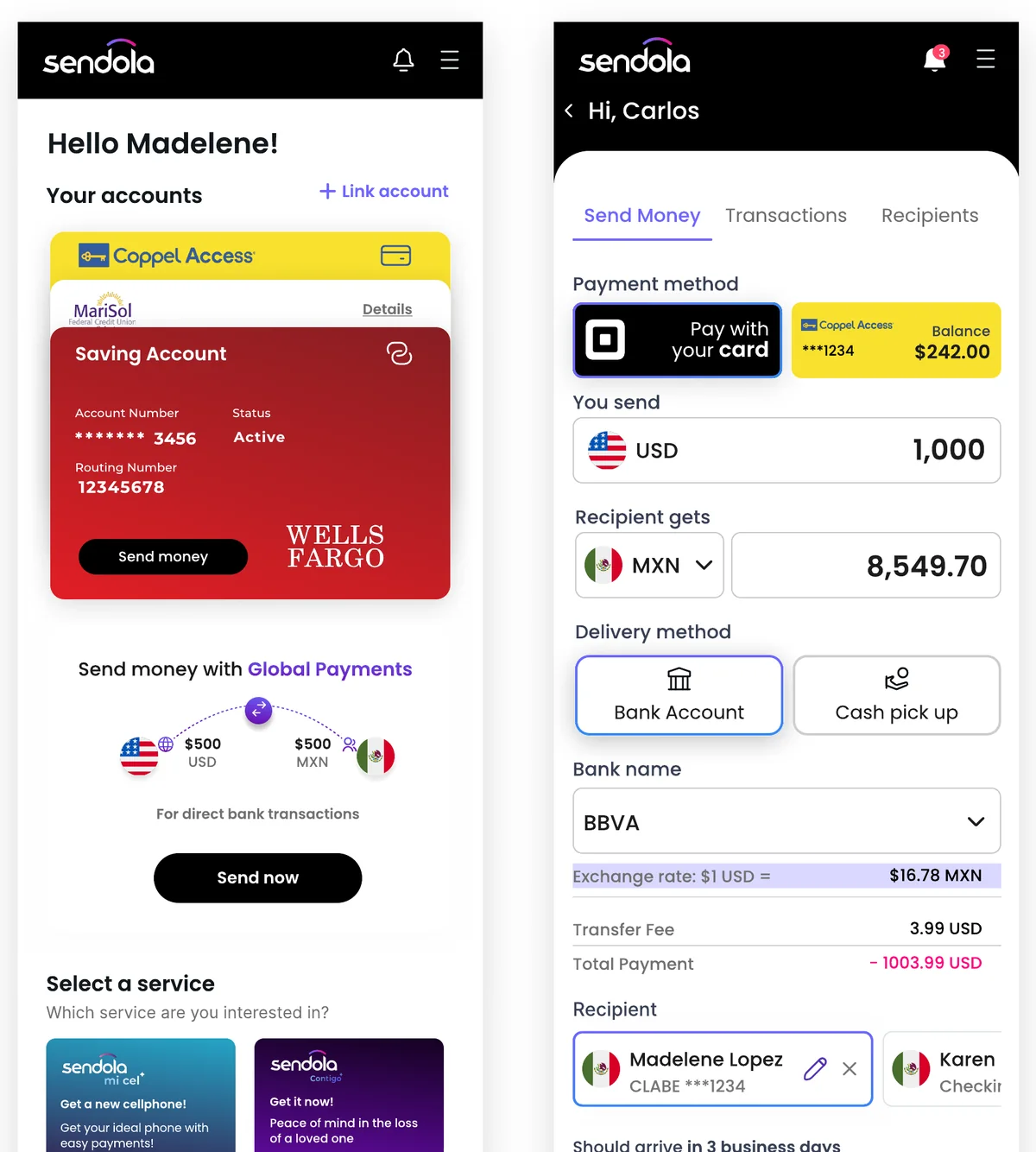
Sendola helps migrant farmworkers bank and send money home. Signing them up took over 12 hours for every worker. We flew out to the farms, watched it happen, and rebuilt onboarding. Time to onboard dropped 60%, and support calls about account setup dropped 80%.
Business need
Many of Sendola's users come from Central and South America to work on the biggest farms in the U.S. Sendola works with those farms to sign their workers up.
To open an account, a worker has to prove they can legally live and work in the U.S. That's where people got stuck. Customers told us onboarding was painful and the app was hard to use.
A worker who couldn't finish couldn't get to their money, keep it safe, or send it home. Each one also took hours from the farm's HR admin and from our support team.
Customer problem
We flew out to our customers in Arizona and helped workers onboard in person. We watched farm admins struggle to get their crews signed up, talked with farmers during and after, and sat down with the admin and tech support teams once it was over.
Behavior change
Workers needed to arrive with the right documents and finish signing up on their own. Farm admins and our support team needed to stop doing it for them.
Hypothesis
The biggest fix turned out to be outside the app.
The farm already knew each worker's name and where they lived. We could load that in ahead of time and tell workers which documents to bring before onboarding day. Then all they'd have to do in the app is log in, upload their visa and passport, and agree to the terms.
So the bet was simple. If we did most of the work before workers opened the app, onboarding would go faster and they'd need much less help.
We tested a prototype to answer three questions. Do people understand the process? Do they know which documents to bring? Can they get through it with fewer questions?
Solution
Workers hear ahead of time that they need their visa and passport. Their name and address come in from the farm, including company housing. In the app, they log in, upload two documents, and agree to the terms.
The first question is whether you have a Social Security number. If you do, you enter it and verify with a driver's license or passport. If you don't, you verify with your passport and visa now, and add your SSN within 56 days. A banner reminds you until it's done.
One long form became a few short screens with a progress bar, in Spanish and English. Each label says exactly what to enter, like "your name as it appears on your ID."
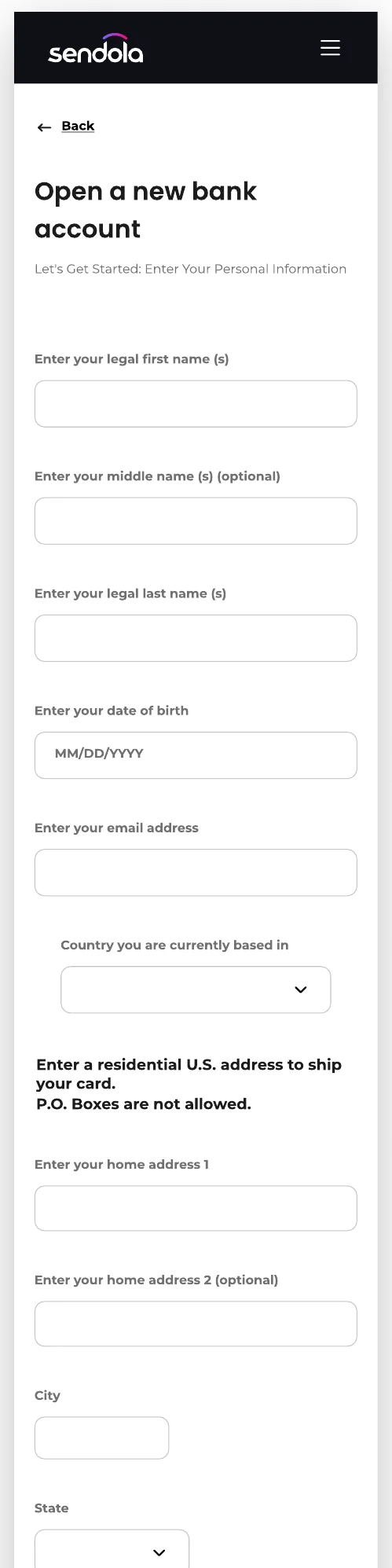
One long form, top to bottom.
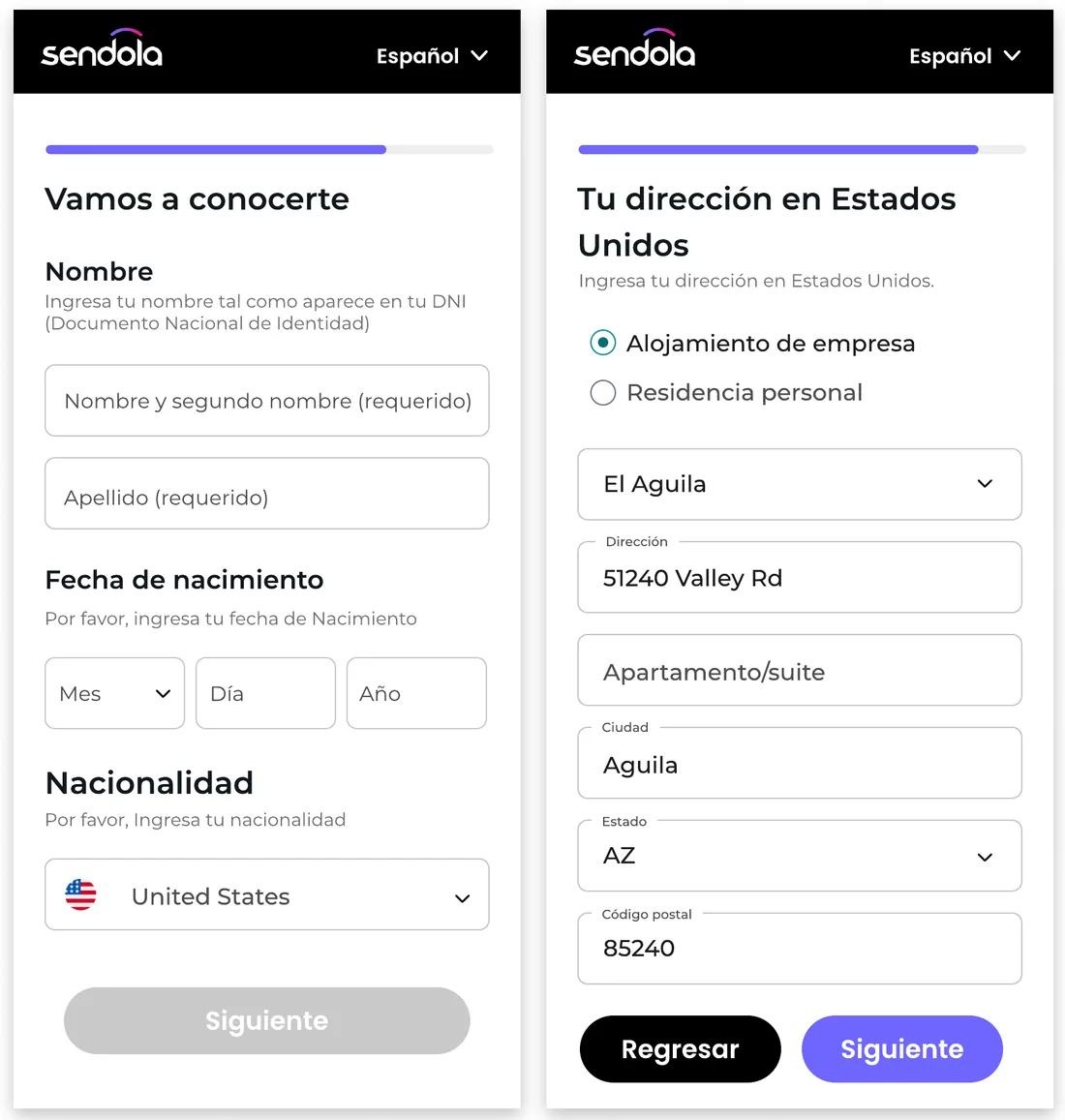
Short steps with a progress bar. Company housing comes pre-selected, with the address already filled in.
I worked closely with Lucina Serna Muñoz, our product manager, and Gustavo Jesús Herrera Flores, our engineering manager.
Leadership
Good designs weren't making it into the app. There was no agile process, no real handoff to developers, and design and engineering rarely talked. So I changed how we worked:
Outcome
Time to onboard dropped 60%. Support calls about setting up an account dropped 80%. Workers and our support staff both told us it was easier.
Measurement
Two numbers we tracked, and two I'd add next.
Time and support calls showed onboarding got easier. Completion and first transfer would connect that to the reason the product exists.
Looking back
Fewer words, more pictures and icons, and short videos inside the app. I had started testing these.
Sendola was moving into the open market. The next challenge is keeping onboarding this easy when there's no farm to load anyone's details ahead of time.
Another product that had to prove itself fast, and reporting for 700+ accounting firms at BILL.