Aaron Uyehara
Product designer · Enterprise + founder velocity

I ship products with AI-native workflows & Claude.

Senior Staff at BILL — leading design on the flagship Accountant Console for 700+ accountant firms, surfaces that power $290B+ in annual throughput.

15+ years across enterprise SaaS (BambooHR, Bridge LMS, Kuali). Plus a parallel track of founding-designer engagements — taking products from napkin to funded MVP.

07
0→1 products
as founding designer
$290B+
Enterprise throughput
on surfaces I design
2022
Designing AI-native
products since
Now — Open to co-founder conversations in fintech, ops tooling, and AI-native productivity.

Ten projects, two altitudes — enterprise scale and founder velocity.

Enterprise · Design lead BILL · 2024–26

Turning a feature backlog into a centralized insights system at $290B scale

The unpopular call to design one reporting framework instead of shipping twelve disconnected reports.

Scale700+ firms
Lift62% view-freq
Savings~9 hrs / firm / mo
Design leadership · Advisory audience.io · 2022–24 · via Spaceketeer

Hired to coach a growing design team — the system was the work that had to happen

Two-year retainer. Brought in to consult on the team and the practice — advising the CEO and Head of Design, coaching PMs and ICs. The design system became the work that emerged from the consulting, and I built it from scratch.

RoleDesign partner
ScopeSystem + org + coaching
Engagement2-year retainer
Design lead · Player-coach Sendola · 2023–24 · via Spaceketeer

Setting direction for an early team and leading them to a funded launch

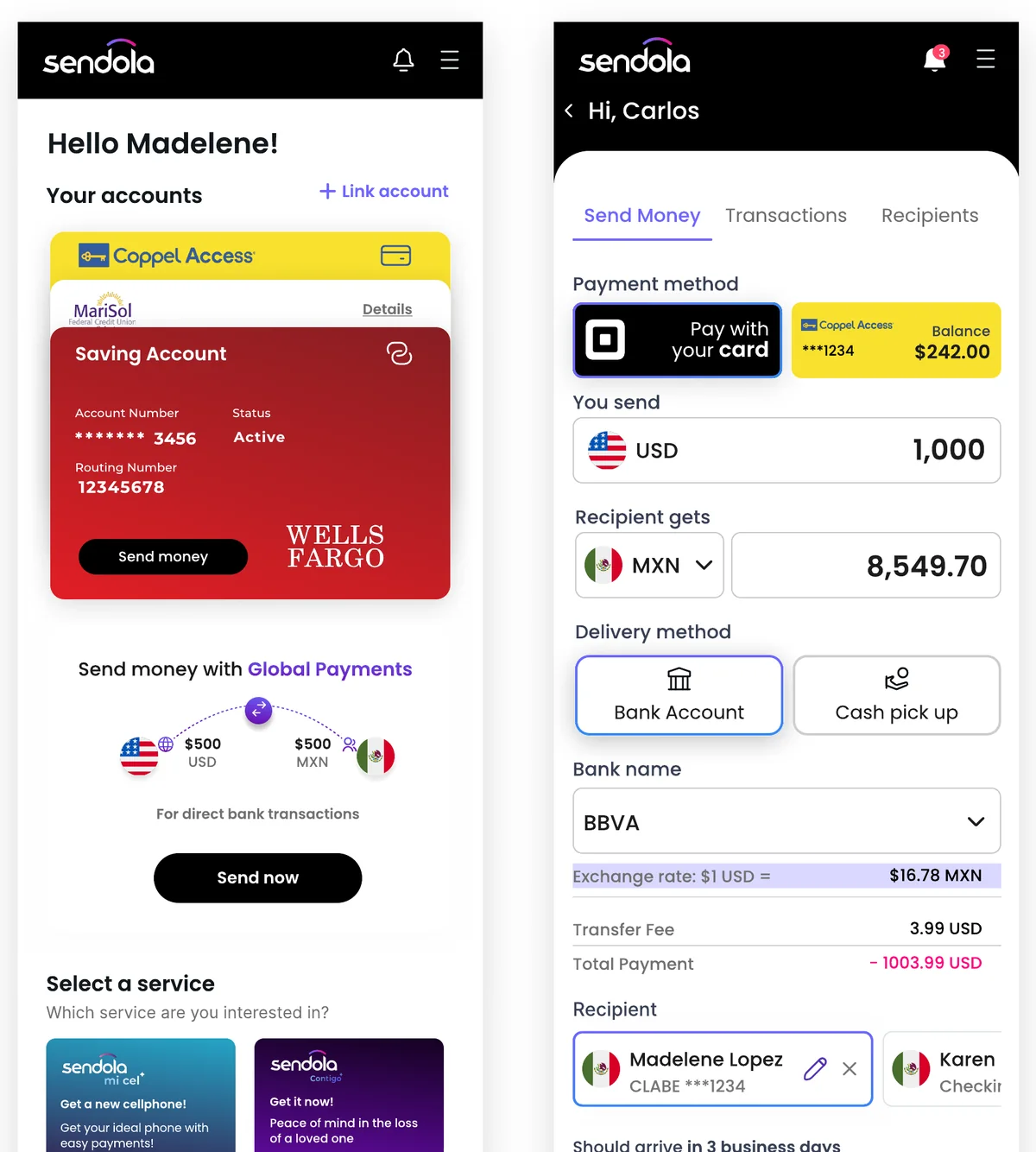
Cross-border money movement for migrant workers. Joined a small in-house team (brand + junior PD), set the direction, organized the work, and shipped Web, native Mobile, and the internal Admin console.

SurfaceWeb · iOS · Admin
StageFunded · launch
RoleDesign lead
0→1 · Founding designer Verdi · 2022

Designing an AI co-pilot for product teams — napkin to ~$1M pre-seed in 11 weeks

Partnered with founders to define the wedge, design the product, and ship the MVP that closed the round. Before ChatGPT existed.

Raise~$1M pre-seed
RoleFounding designer
Timeline11 weeks
Enterprise · Lead designer Instructure · Bridge · 2015–17

Saving a renewal cohort by redesigning curriculum authoring around the people actually building programs

Customers threatened to walk over the existing tool. I redesigned the dual author/learner experience in time for renewal — retained 100% of the at-risk cohort and added new logos.

Outcome100% renewals retained
SurfaceWeb · responsive · mobile
RoleLead designer
0→1 inside enterprise Instructure · Bridge · 2016–17

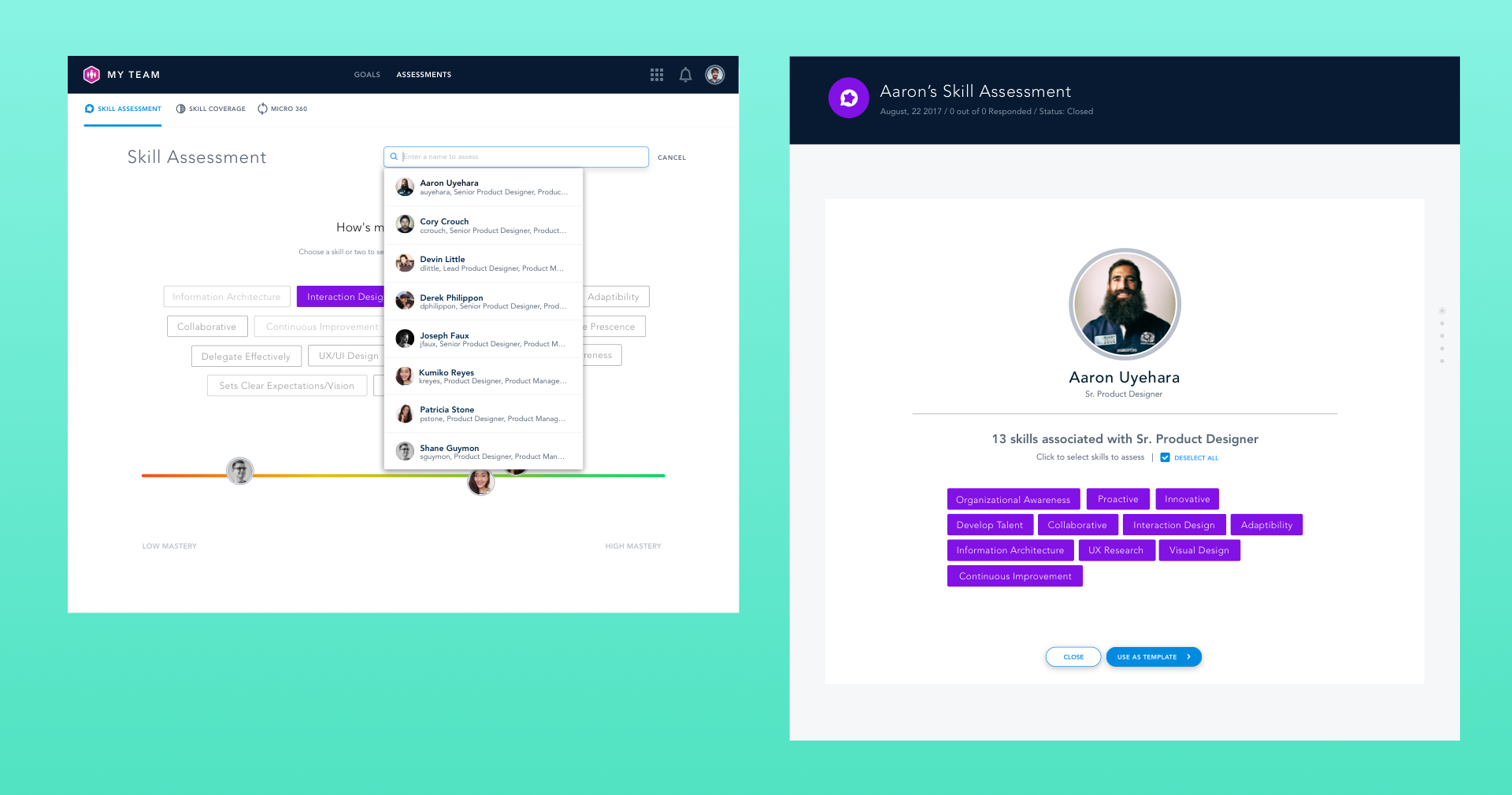
Adding Skill Assessments to a learning platform without breaking what people already trusted

New product line inside Bridge — data model, assessment flow, manager-facing analytics. Designed so the existing experience didn't get taxed by the new one.

RoleLead designer
SurfaceAuthor · learner · admin
Scope0→1 product line
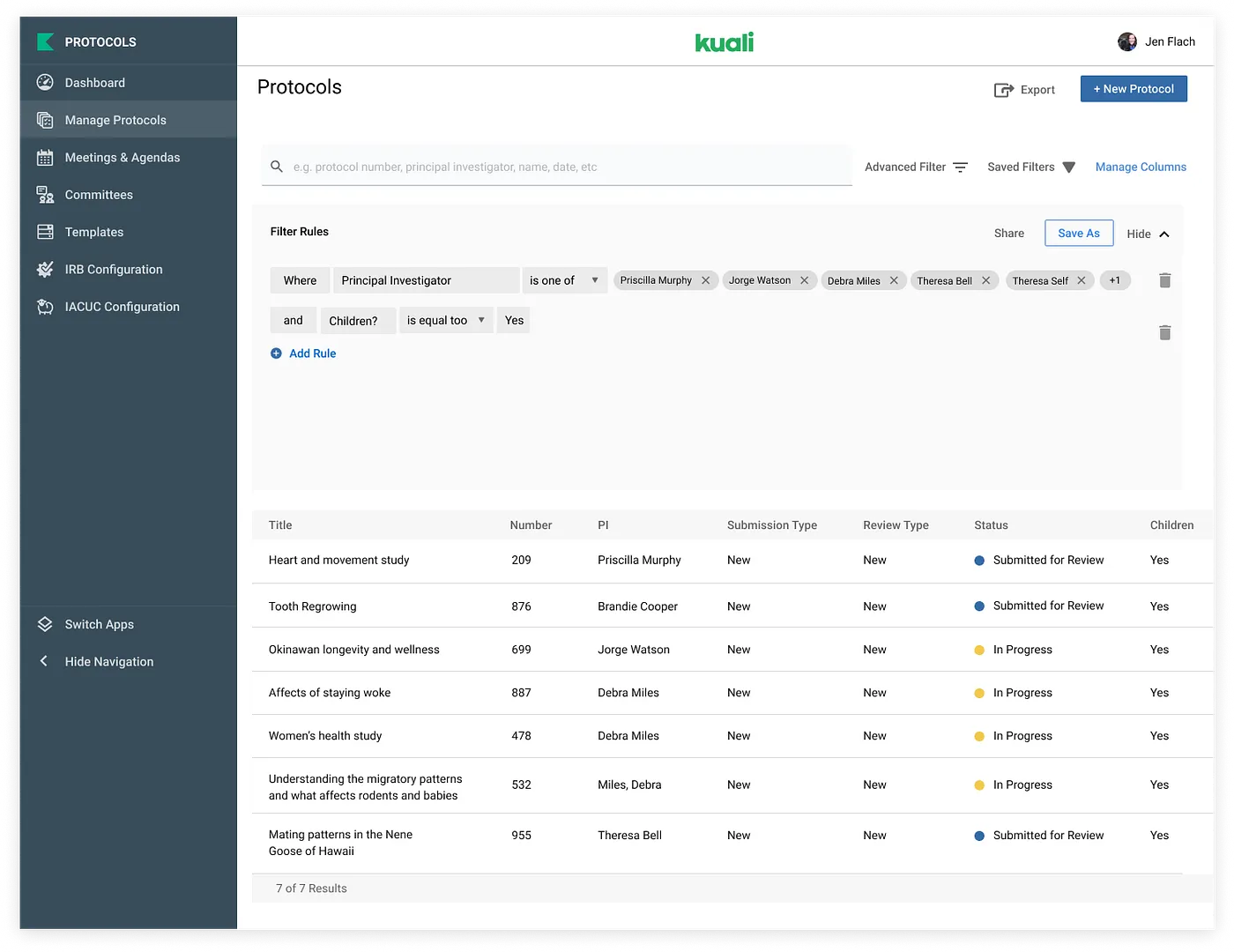
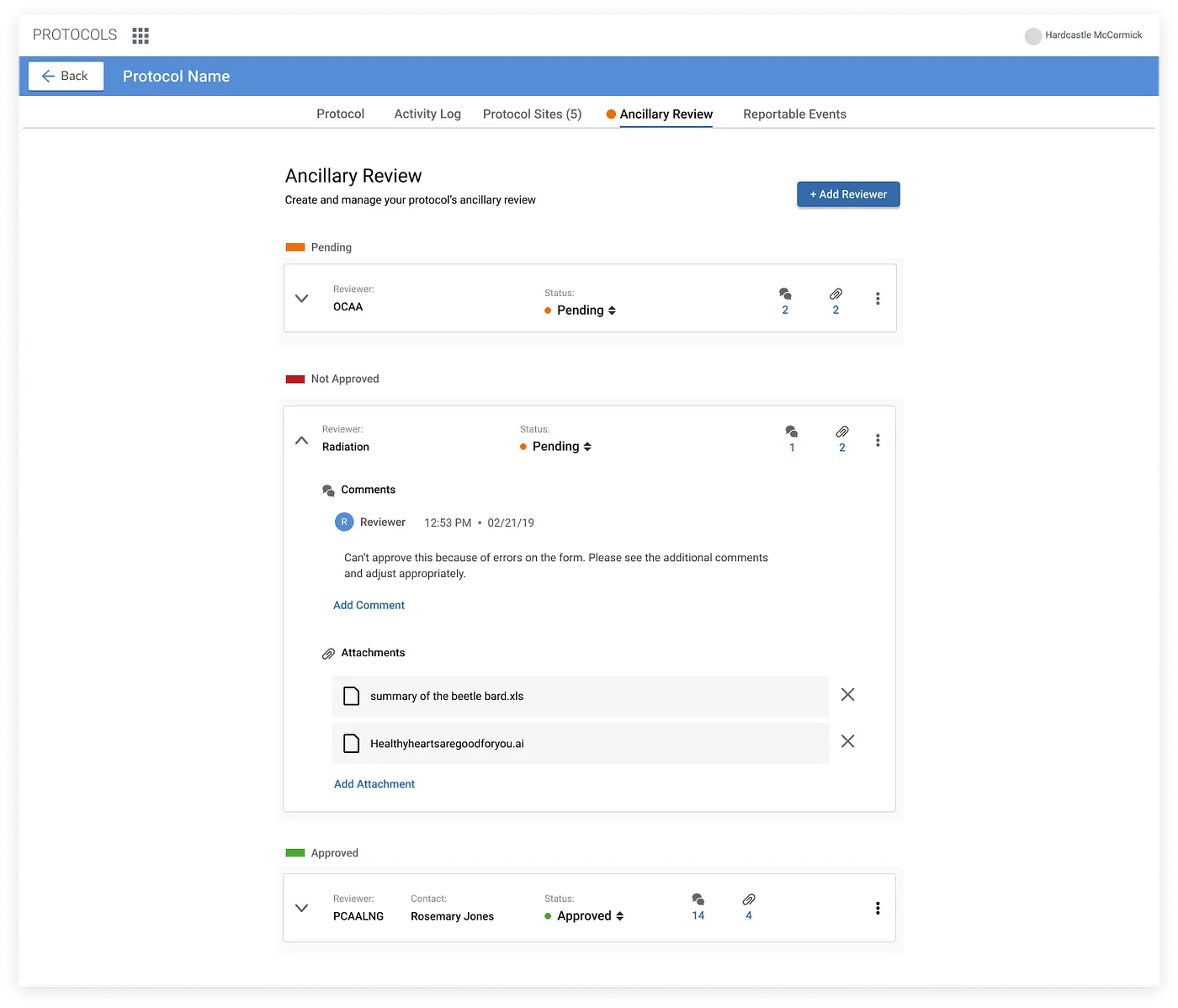
Enterprise · Lead designer Kuali · 2018–20

Turning research-compliance from a queue of features into a coherent workflow

Five linked features in Kuali's IRB platform reframed as one decision: stop treating compliance as a backlog, start treating it as a workflow.

ReachResearch universities
Scope5 connected features
RoleLead designer
0→1 · Enterprise SaaS Kuali · 2017–19

A continuity tool designed for the moment of crisis — not the moment of audit

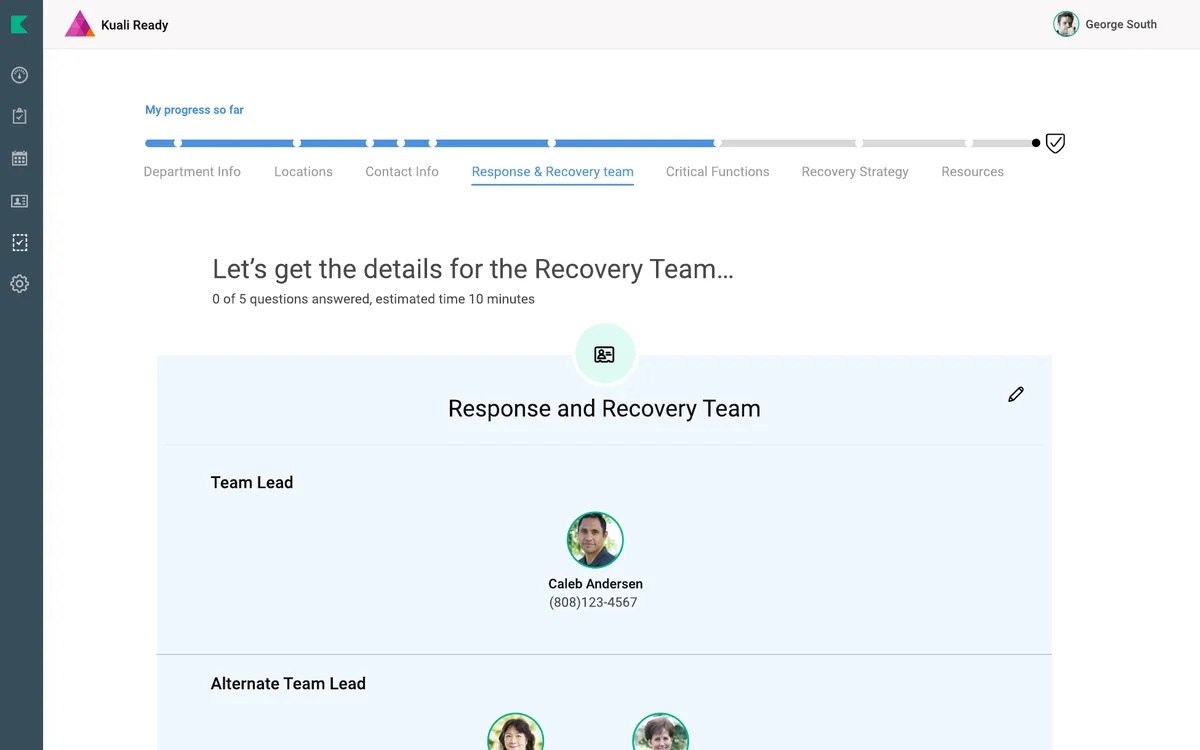
Designed Kuali Ready 0→1 — replacing binder-and-spreadsheet continuity planning at higher-ed institutions.

BetCrisis over compliance
SurfaceWeb + mobile
RoleLead designer
0→1 · Founding designer Finches · 2021

Group communication for dedicated circles — not another social network

Founding designer on a private-circle app for the people you'd actually call when something matters. From wedge to funded MVP.

Raise~$1M pre-seed
RoleFounding designer
SurfaceiOS + web
0→1 · Founding designer Dash-Fi · 2020

Total-cost-of-ownership for cars, designed for the driver who hates spreadsheets

Concept to MVP for an automotive total-expense platform. Founding-designer work across brand, IA, mobile, and onboarding.

StagePre-seed funded
RoleFounding designer
SurfaceiOS + web

Living proof, this week.

Past work is the resume. This is the leverage. Things I've shipped recently with Claude — designed, prototyped, deployed, live.

Beliefs in public.

AI doesn't replace taste — it makes taste the only thing that's still scarce. The designers who learn to ship at founder speed and operate at platform scale get to build whatever they want next.

← Back to work

Scaling accountant insights across 700+ firms

How a feature backlog became a centralized insights system — and what it took to convince the org to ship a framework instead of twelve more reports.

Year
2024–26
Role
Design lead
Team
4 eng · 2 PM · 1 PMM
Surfaces
AP · AR · Spend
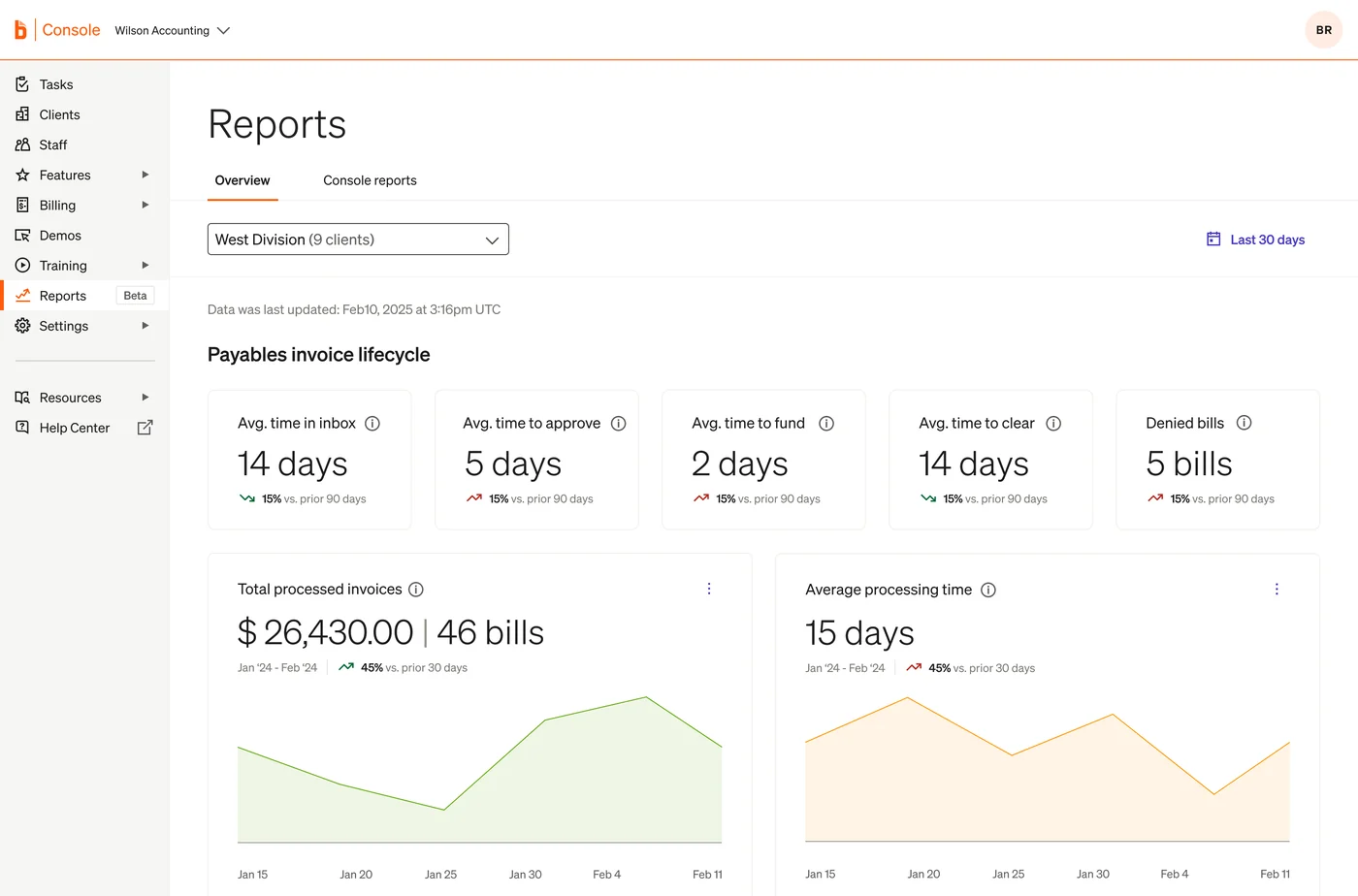
BILL Accountant Console Reports — Payables invoice lifecycle dashboard with KPI tiles (avg time in inbox 14 days, avg time to approve 5 days, avg time to fund 2 days, avg time to clear 14 days, denied bills 5), total processed invoices and average processing time charts, plus bar charts for amount by payment type, amount by aging summary, and bills paid by staff
BILL — Accountant Console Reports: the centralized surface where individual reports are configurations of one insight model · 2024–26

The bet

I bet we'd get more leverage from one well-designed reporting surface than from a backlog of twelve disconnected feature requests.

Context

When I took the lead on Accountant Console reporting at BILL in 2024, our 700+ partner firms were asking us for reports. Different reports, different formats, different cuts of the same data. The backlog had a dozen requests and was growing every quarter. Each one was a feature ship. None of them was a system.

The temptation — and the path of least resistance with leadership — was to clear the queue. Ship the reports, close the tickets, move the bar chart on the OKR dashboard. The cost of that path was a console that would look more like a filing cabinet every quarter, and a team that would be staffing report requests forever.

Decisions I made

  1. Treat reporting as one surface, not a queue of features

    I argued for designing the underlying insight model first — what data, what cuts, what defaults — and treating individual reports as configurations of that model. The unpopular call. It cost us two months of optics on the backlog burndown chart.

  2. Design for the firm size that hurts most, then scale up

    We had data across 700+ firms but kept hearing loudest from the largest. I pushed to design for mid-market firms (10–50 accountants) first — they had the clearest mental models and the least patience for bad defaults. Their feedback compressed the design loop.

  3. Ship the framework before the polish

    Shipped a deliberately rough v1 in week 10 to validate the model with five design partners. Half the system was placeholder. That call surfaced two structural decisions we'd have shipped past in a polished build.

Outcome
700+
Firms on new surface
$290B+
Annual throughput visible
62%
Lift in view-frequency
~9 hrs
Saved / firm / month

What I'd do differently

I'd have pulled engineering into the framework conversation two weeks earlier. The model decisions had implementation consequences they could have flagged faster, and I lost a sprint re-cutting the IA after a data-architecture conversation I should have had on day one.

I'd also have invested earlier in a written narrative for non-design leadership. The framework bet was easy to defend in a design crit and harder to defend in a roadmap review where the unit of credibility was "tickets closed." Owning the org communication is part of the design work at this level.

← Back to work

Saving a renewal cohort by trusting the people building the programs

In 2015, Bridge customers were threatening not to renew. The authoring tool was the friction. I redesigned the dual author/learner experience in time for the September close — and we retained 100% of the at-risk cohort.

Year
2015–17
Role
Lead designer
Team
Todd Erickson · PM
Surfaces
Web · responsive · mobile

Context

Bridge was Instructure's young corporate-training product. The MVP let trainers build courses, but the way it bundled them into programs was rigid — learners had to take everything in order, authors had no way to visually organize content, and learners couldn't see why a program mattered or what came next.

By 2015 the program was real enough to attract enterprise customers and broken enough to lose them. Two of our biggest accounts were threatening not to renew in September unless authoring got fixed. I was paired with Todd Erickson (Senior PM) to lead the redesign.

The bet

The team wanted a simpler authoring wizard. I bet that what authors actually needed was more control — a flexible workspace, not a guided rail.

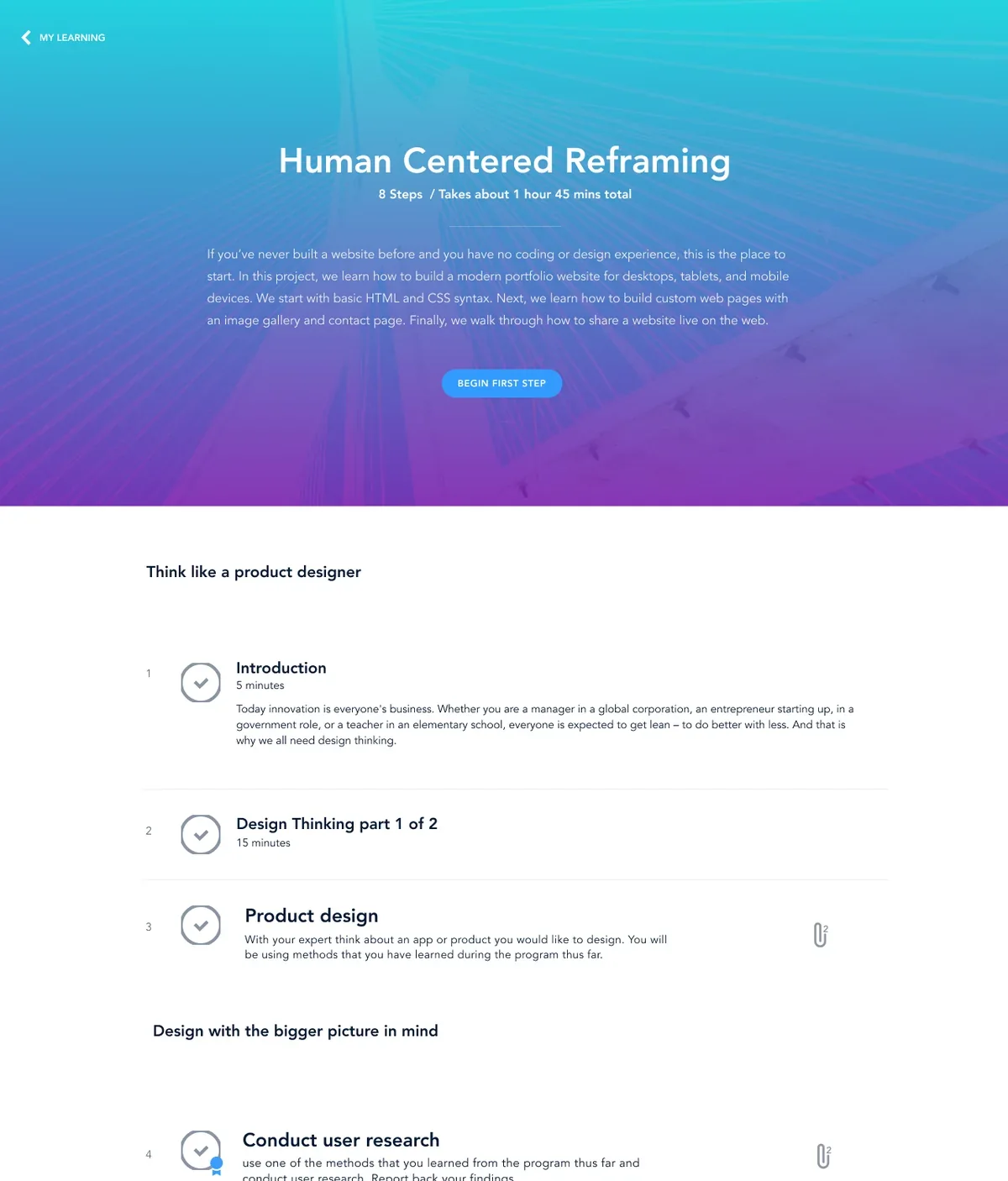
Bridge Programs learner view — Human Centered Reframing program with header, BEGIN FIRST STEP call to action, and a list of courses (Introduction, Design Thinking, Product Design, Conduct user research, Quiz, Wireframing 101, UX research techniques, Capstone)
Bridge Programs — the shipped learner experience: a clear path with one next-step CTA

Decisions I made

  1. Design the author and learner experience as one product, not two

    Most LMS work treats authoring and learning as separate jobs. I argued they were one: every author was building a path, and every learner was walking it. We designed the dual experience together — what an author saw and what the learner experienced were the same thing in two views.

  2. Trust authors with the power tools

    The "simpler wizard" path was politically safer and would have failed. Authors at our largest accounts were instructional designers — power users with real judgment. The redesign gave them a flexible workspace with sections, drag-and-drop reordering, and a card/list view. Less hand-holding, more leverage.

  3. Ship the prototype to the at-risk customers first

    I built a clickable prototype in Sketch + InVision and tested it with the customers threatening to walk before we built anything. Their feedback re-cut two flows. By the time engineering started, the design had already passed the renewal interview.

Selected screens

Bridge Programs author view — On Boarding program in an empty state with a gradient header, PUBLISH PROGRAM and DONE actions, a floating plus button, an illustration of courses dropping into a program, and the message 'Your Program is Empty / Start by adding courses to your program'
Author view — the empty state teaches the affordance: drop courses to compose a program
Bridge Programs learner view — Tesla-themed program with a Welcome video by Susan Williams, sections for Tesla Culture and Tesla Products, and course cards for Welcome to Tesla, Our Mission, Our Leadership, Our History, and Model S
Learner view — a real-world program (Tesla example): video, sections, courses, progress
Bridge Programs component spec — a long page documenting the ADD, SEARCH, and SECTION components with their states: empty, hover, growing, typing, results, blank, filled, with delete and drag affordances
Components — the rules made explicit so engineering and authors both worked from one spec
Outcome
100%
Renewals retained in the at-risk cohort
+New
Logos picked up post-launch
2 views
Author + learner shipped as one product
1 spec
Full handoff doc with states + components

A note on the team

This is some of the work I'm proudest of, and a lot of why is the people. Todd Erickson on product, the broader Instructure design team in the offsite where we sketched the early concepts — these became lifelong friends, not just shipmates. The lesson I keep taking forward: the work is durable because the relationships were durable. Hard things stay possible when the people stay close.

What I'd do differently

I'd have invested earlier in a written narrative for non-design leadership. The "trust the authors" bet was easy to defend in a design crit and harder to defend in a roadmap review where the unit of credibility was "simpler is safer." Owning the org communication is part of the design work, even at IC level.

← Back to work

Adding Skill Assessments to a learning platform without breaking what people already trusted

A 0→1 product line inside Bridge LMS — what eventually became Bridge Perform. Designed as one system across Admin, Manager, and Employee, and validated with paying prospects before production code was written.

Year
2016–17
Role
Lead designer
Team
4 designers + PM
Surfaces
Admin · Manager · Employee
Bridge Skill Assessments — composite hero showing the shipped product across Admin, Manager, and Employee surfaces
Bridge Skill Assessments — the spine of what became Bridge Perform · 2016–17

Context

In late 2016, Josh Coates (Instructure CEO) brought the Bridge team a question: could the same platform that handled corporate training also handle talent management?

It was a real question. Bridge had a happy customer base that loved it for L&D. Bolting on a different product line could either build a new revenue engine — or break the experience the existing customers had paid for. I was given a Gartner and Bersin whitepaper, a week of research, and a brief: figure out the skill-assessment piece of this new product. The work would eventually become Bridge Perform.

The bet

The way to add a new product line inside Bridge without breaking what people trusted was to treat the new thing as a system — three connected user experiences (Admin, Manager, Employee) sharing one data model — and to validate it with paying prospects before a line of code was written.

Decisions I made

  1. Design the three users as one system, not three features

    Admin configures skills, jobs, and assessment templates. Manager requests assessments and reads team-level data. Employee self-assesses and requests assessments from peers. Each role had a different surface, but all three read and wrote to the same skill model. Designing them as one product meant the Admin's configuration choices shaped what a Manager could see and what an Employee was asked. Three roles, one truth.

  2. Make the org chart the navigation, not a feature

    Leadership wanted "a way to see the org at a glance." That's usually a request for a chart on a dashboard. I argued the org chart had to be the primary navigation for the Manager and Admin experience — every question about skills started with "for which people?" If the org chart is decoration, navigation falls back to lists and filters. If it's the navigation, the whole product gets simpler.

  3. Validate with paying prospects before writing code

    We took the prototype on tour. Several companies said "we'll pay for this right now" before production code existed. The taste decision was confirmed by checkbooks, not internal politics. We caught the parts that didn't translate from prototype to daily-use expectations, and cut them before engineering invested in them.

Selected screens

Whiteboard brainstorm — the three-roles-one-data-model concept sketched out with the team
Three roles, one data model — the brainstorm that made the case for designing the system, not the features
Walk-the-wall artifact — printed screens pinned to a wall showing the end-to-end flow
Walking the wall — every screen pinned up so the flow was legible to anyone in the room
Bersin and Gartner talent-management research reference used to scope the project
Anchored to the Bersin and Gartner research that scoped the talent-management space
The Skill Assessments assessment-taking surface — clean form designed for employees to self-assess or peer-assess
The assessment surface — designed to feel light even when the data underneath was load-bearing
Second view of the assessment experience — peer feedback presented anonymized
A second view of the assessment experience — anonymized peer feedback, immediately useful to the employee
Manager view — skills mastery across the team rendered with the org chart as primary navigation
Manager view — skills mastery across the team, the receipt for the org-chart-as-navigation bet
Outcome
1 year
Concept → alpha → beta
0→1
New product line inside an existing platform
Bridge Perform
What this work became
Pre-code yes
Paying prospects committed before production began

A note on the team

Four designers and a PM. We critiqued weekly with the rest of the Instructure design org. The reason this shipped fast wasn't AI (it was 2016) — it was the cadence of feedback. Smart people who would tell you when something was off, on the same day you put it up. The kind of team I keep trying to recreate.

What I'd do differently

I'd build the org-chart navigation in week one, not month three. Once we shifted to "the org chart IS the navigation," every prior screen got simpler — and the screens after got designed faster because the structural decision was already made. Lead with the structural decision, not the feature decisions.

← Back to work

Designing an AI co-pilot for product teams — before ChatGPT existed

Eleven weeks from a napkin sketch to a working MVP and a closed pre-seed round. The hardest part wasn't the AI. It was designing for what the model could actually do in 2022, not what we wished it could.

Year
2022
Role
Founding designer
Stage
Napkin → ~$1M pre-seed
Timeline
11 weeks to MVP
Verdi — an AI co-pilot for product teams, 2022

Context

In the summer of 2022, the founders behind Verdi had a thesis: product teams were running discovery the wrong way. The methodology was well understood — Continuous Discovery, Learn Kickoffs, opportunity mapping. The tooling wasn't. Teams ran sessions in Miro and FigJam with a designated facilitator and lost a third of every meeting to setup, exercise-explanation, and gathering inputs.

Verdi packaged the methodology into the product itself. A real-time, multiplayer facilitation tool with a built-in agenda, timed exercises, and AI that captured and structured the team's contributions in the moment. The team showed up, the meeting ran itself, and the shared understanding was the output — not homework due Friday.

This was four months before ChatGPT launched. The AI tooling we had access to was real but rough. The product had to be designed around what the model could reliably do — listen, summarize, structure — not what the science-fiction version could promise. They brought me on as the founding designer with one brief: get us to a working MVP we can put in front of investors in eleven weeks.

The bet

Make the meeting structure the product. The team only had to show up — the methodology was already in the room.

Decisions I made

  1. Pick a sharp methodology, package it as the product

    Most discovery tools assume the team brings their own facilitator. Verdi shipped the methodology — Goals, Opportunity Brief, Brainstorm Insights, Map Insights, Define the First Experiment — as a timed, guided session with built-in exercises. The structure was the value. Generic "any meeting" tools (Miro, FigJam) had infinite flexibility and zero opinion. We had one opinion, executed sharply.

  2. Multiplayer-first, because the product was useless solo

    Designed for 4–7 people in a room or on a call at once: shared real-time state, avatar attribution, advance-together pacing, a "Saving" indicator that made the collaboration legible. The product had to feel like a live room, not a doc. We made the multiplayer affordances central, not an upgrade tier.

  3. AI captures the team — it doesn't replace them

    The 2022 models couldn't reliably generate insight. They could listen, structure, and synthesize what the team said. We built Verdi around what the model could honestly do, with citation back to who said what, edit affordances on every AI output, and zero "the AI thinks…" theater. That honesty was what got product teams to trust putting their actual thinking through the tool.

Selected screens

Verdi — Idea Brief screen with timed agenda sidebar (Goals, Opportunity Brief, Idea brief, Brainstorm insights, Map insights), a multiplayer team header, and a Spider chart idea with a Recommended Insights dropdown open
Verdi — the methodology IS the product: timed agenda, multiplayer team, and the moment the team maps insights together · 2022
Verdi — Insights Map: a five-by-five confidence-by-relevance matrix with the team's insight cards clustered into rows (Unknown, Hypothesis, Anecdotal, Directional, Fact), plus Unmapped Insights and Recommended Insights panels on the right
Verdi — Insights Map: where the team's contributions cluster into a shared picture of what they actually know · 2022
Verdi — Opportunity Brief with a Customer pinned (Cascade), Problem and Alternatives and Business Impact fields, and two AI-surfaced insight rows (Revenue Tracking, User Adoption) tagged UNKNOWN and AGNOSTIC with edit affordances
Verdi — Opportunity Brief: AI-surfaced insights tagged with confidence and relevance, every field editable, no "AI thinks…" theater · 2022
Outcome
~$1M
Pre-seed raised on the MVP
11 wks
Napkin to investor-ready
Pre-GPT
Shipped before ChatGPT existed
0→1
Strategy → brand → UX → prototype

A note on the team

Founders who hire a designer at eleven-week pace either trust the designer fully or they don't ship. The Verdi founders trusted me to make the calls. I trusted them to defend the wedge when investors wanted us to expand it. That's the relationship that gets a product through the round — not a more elaborate brand, not a prettier deck.

What I'd do differently

We optimized for the pitch demo. Some of the magic moments that landed in investor meetings didn't survive contact with daily use — the inline suggestions were powerful in a scripted flow and noisier in a real workspace. The next time I design an AI product on a sprint clock, I'll build the "second-week experience" alongside the first-impression demo, not after.

The thing I'd repeat: the failure-mode design. Every AI product I've designed since has used the same posture — Verdi taught me that the honesty in the interaction is what makes the magic stick.

← Back to work

Hired to coach a growing design team — the system was the work that had to happen

A two-year retainer at audience.io. Brought in to consult on the team and the practice — advising the CEO and Head of Design, coaching the PMs and ICs. The design system became the work that emerged from the consulting, and I built it from scratch.

Year
2022–24
Role
Design partner · Advisor
Working with
CEO · Head of Design · PMs · ICs
Via
Spaceketeer Studio
Audience Design System — cover slide dated September 14, 2023
audience.io — system + org · 2022–2024

The shape of the problem

audience.io had a product, a team, and momentum. What they didn't have was a shared bar. Every designer was good. Every screen looked a little different. PMs were spec'ing the same component three ways across three squads, and the Head of Design was spending more time refereeing decisions than raising the ceiling on the work.

They didn't need another IC. They needed someone who'd already built and scaled a design system inside a growing team — and who could coach the people doing the day-to-day so the system stuck after I left.

The bet

A design system isn't an artifact. It's a way for a team to agree with itself faster — and the only way it sticks is if the leadership and the ICs are coached on the same surface.

What I was actually hired for

On paper: consult on the team and the practice. In practice, three jobs braided together — and one of them (build the system) I added, because the team's ceiling wasn't going to lift without it.

  1. Advise the leadership

    The original brief. Stood up a weekly cadence with the Head of Design on team structure, hiring bar, and how to delegate craft decisions without losing the thread. Worked async with the CEO on what "design as a function" should look like at their stage.

  2. Coach the team

    The other half of the original brief. Open office hours for PMs and ICs. When a designer or PM brought a question, I taught them how to answer it next time — what tradeoff they were making, where they had freedom, and where the team needed to be opinionated. The goal was a team that could ship without me.

  3. Build the system — the work that emerged

    It became clear in the first month that no amount of coaching was going to land if everyone was rebuilding the same primitives in different files. The system wasn't the brief — it was the thing the brief made obvious. So I built it: tokens, components, patterns, documentation. A real foundation, not a Figma library cosplay. Every component shipped against a real screen someone was actively designing. Nothing speculative.

How I worked

Retainer, not project-shaped. The problem wasn't one deliverable — it was a quarter-over-quarter raising of the team's ceiling. Standing time with the Head of Design, async with the CEO, open office hours for the rest of the team.

Built the system in the open. No six-month "big reveal." Shipped foundational tokens and the first ten components in the first month so the team could start adopting immediately. Every component after that was driven by a real screen, not a speculative spec.

Documentation that respected the reader. Wrote the docs for the IC designer who needs to ship today, not for the future system maintainer. Every component answered three questions in this order: When do I use this? When do I not use this? What are the edge cases?

Coaching, not gatekeeping. The job wasn't to be the bottleneck. It was to teach the team to ship without me.

Selected artifacts

Audience design system foundations — colors, typography, grid and space, icons, effects, buttons, with rows of token and component screens in Figma
Foundations — colors, typography, grid & space, icons, effects, buttons · each row a real screen the team could pull from
Audience design system Inputs spec page — every input type documented with examples, including text input, number input, time picker, calendar, select, datepickers, search, comments, and dialogs
Inputs — every form pattern documented with the "when do I / when don't I" voice baked into the spec
Audience design system at scale — multiple component sets and pages visible across the Figma file
The system at scale — foundations, components, and pages working as one library the team built against
Audience product screen — Campaigns page with an empty-state modal asking what kind of campaign to create, showing nine campaign-type cards built from the system's components
System in product — Campaigns empty state, every element pulled from the library, every decision a configuration of an opinion the team had already made
Outcome
2-yr
Retainer — trust over time
System
Built from scratch, adopted across the team
Leadership
Advised CEO + Head of Design on org & bar
Coaching
PMs & ICs leveled up to ship in the system

What it taught me

The seniority that matters in a growing design org isn't taste — it's the willingness to treat the leadership coaching and the IC coaching as the same job, on different surfaces. If the CEO and the Head of Design aren't aligned on what "good" means, no token spec is going to fix it. If the designers and PMs don't trust the system, no leadership decree is going to make them use it.

The thing that holds it all together is taste — shared, defended, modeled by the most senior people in the room. My job at audience.io was to be one of those people for a while, until the team could be it for themselves.

What I'd do differently

I'd push harder, earlier, for a single named "system steward" inside the team — the handoff would have been cleaner. And I'd have started writing the documentation in week one, not month three. Docs are the system; everything else is scaffolding.

The thing I'd repeat: the retainer shape. Patience buys depth, and depth is what makes the work survive after the engagement ends. I'd take this shape over a fixed-scope build every time.

← Back to work

Setting direction for an early team and leading them to launch

Sendola — a funded fintech for migrant workers (cross-border transfer + banking). Joined a small in-house team that had brand and a junior PD but no shipping engine. Set the direction, organized the work, and led them to ship across Web, native Mobile, and the internal Admin console.

Year
2023–24
Role
Design lead · Player-coach
Surfaces
Web · iOS · Admin
Via
Spaceketeer Studio
Sendola — cross-border money for migrant workers · 2023–2024

The shape of the problem

Sendola was solving a real problem for a real audience: migrant workers moving money across borders — transfer, banking, the financial plumbing that everyone else makes hostile to people without the right zip code. They were funded. They had a brand. They had a small design team and a junior product designer carrying more than they should have been.

What they didn't have was a direction set, a backlog organized, and the muscle to drive the work all the way to launch. I was hired to be that person — senior enough to make the calls, hands-on enough to ship alongside the team, deliberate enough to bring the junior PD along instead of around.

The bet

A small team can lose months to a single un-made decision. The job of a design lead at this stage is less about drawing the right rectangle and more about removing the ambient indecision so the team can draw rectangles in parallel.

Three jobs, intentionally braided

  1. Set direction

    Make the architectural and product-shape decisions that were stalling: what the surfaces are, what the IA looks like, what's v1 vs. v2, what we're not building. I made those calls in writing, with reasoning, so the team could move and the founders could push back if they disagreed.

  2. Organize the work

    Took the brand designer's identity work and the junior PD's screens and pulled them into a coherent product the team could execute against. Less "redo everything," more "give everything a spine."

  3. Lead the team to ship

    Pair, critique, unblock, make calls. The bar wasn't "Aaron designs the product." The bar was "this team ships a product they're proud of, on time, and gets stronger doing it." Player-coach — the same shape I ran at Kuali, applied to an external team in a hotter environment.

How I worked

Listened before pitching. Two weeks in, no decks, no redlines. Sat with the founders on the why, with the brand designer on what was already settled, with the junior PD on where they felt stuck. The biggest unlock was usually permission — telling the junior PD which of the four directions they were holding was the right one and why.

Designed the hard parts, gave the rest away. Owned the surfaces where the wrong call would cost the company — onboarding, money movement, the trust-laden moments. The junior PD took the surfaces where the right call was already in reach with a little coaching. The brand designer kept owning brand application across the whole thing.

Built three products in one engagement. Mobile — the consumer surface, where trust got built or lost. Web — the equivalent flows on a different device class, IA decisions made once and applied to both. Admin — the internal tool ops used to support customers. The one the team underrated and I prioritized, because a fintech that can't help its customers in real time isn't a fintech.

Coached the junior PD into a stronger one. Weekly 1:1s. Critique that was specific and warm. The goal wasn't that they finished the engagement having drafted screens — the goal was that they finished as a stronger designer than they started.

Selected artifacts

[ Drop in: onboarding flow (mobile) before/after · money-movement core flow · Admin console (the surface most fintechs underbuild) · one example of the brand designer's identity work applied inside product · one artifact from a coaching moment (critique doc, IA sketch, written decision). ]

Outcome
3 surfaces
Web · iOS · Admin — shipped to launch
Launch
Funded fintech to market
+1 senior
Junior PD leveled up across the engagement
Player-coach
Same shape as Kuali, hotter clock

A note on the company

The v1 I shipped took Sendola to market. The company has since evolved into a different product — that's the shape of early-stage work. The receipt is the launch and the team that shipped it, not the company's current state.

What it taught me

The seniority that matters most in an early-stage team isn't taste — it's the willingness to make calls in writing and own them. And bringing a junior designer along is a senior responsibility, not a charity move. The PD I worked with had real judgment that needed altitude, repetition, and someone who would say "yes, that's the right one, ship it" out loud. That's leverage. That's how a senior person multiplies themselves across a team they don't run.

What I'd do differently

I'd write the launch criteria down in week two, not week ten. Teams converge faster when "done" is visible from the start. And I'd be even more explicit about the player-coach split with the junior PD upfront — they would have asked for more reps, sooner.

← Back to notes

Designing seven MVPs for founders: what works, what wastes their money

N°01 May 14, 2026 9 min read

Between 2020 and 2024 I was the founding designer on seven products for early-stage founders. Five of them raised pre-seed funding, totaling somewhere north of $2M. One was acquired. One quietly died. After enough reps, the patterns stop being individual stories and start being a method.

Here's what I've learned about what to build, what to skip, and where founders most often spend money they don't need to spend on design.

1. The first design deliverable should be a deck, not a screen

Founders hire a designer hoping to skip the slow part — articulating what they're actually building and why someone would pay for it. They want screens because screens feel like progress. Screens are also the most expensive thing you can produce before the strategy is settled.

For every project that worked, I spent the first week making a slide deck that said: this is the user, this is what's broken for them, this is our wedge, this is what we're explicitly not doing. The founders who pushed back hardest on doing this were the ones whose products struggled later.

If you can't make the deck, the screens won't save you. They'll just make the disagreement more expensive to resolve.

2. Brand identity is almost always the wrong first investment

Pre-seed founders consistently overweight brand and underweight onboarding. I get the impulse — a logo and a wordmark feel like becoming a real company. But your real first impression is whatever screen the user sees the moment they understand what your product is for. That screen rarely has a logo on it.

My rule with founders: brand in week one, but only the version that fits inside a single Figma frame. Real identity work waits until you've shipped something that pulled in five users who weren't your friends.

3. Use AI to compress the wireframe-to-prototype loop, not to replace strategy

Claude can write a passable PRD. It can generate a hundred onboarding variants. It can build a working prototype in an afternoon. What it cannot do — and what your founders are actually paying you for — is the judgment call about which of those variants the product should ship.

I now spend my AI leverage on the middle of the design process: turning a sketch into a working prototype, generating edge-case screens, mocking up A/B comparisons. I spend zero AI leverage on the strategy at the start or the polish at the end. Both of those are where my taste actually matters.

What I'd tell a founder hiring their first designer

  • Hire for taste and judgment, not portfolio polish
  • Pay for the strategy deliverables, not the pixel ones
  • Insist on a ten-day kickoff with no Figma file produced
  • If your designer can ship a working prototype without an engineer, your pre-seed dollars go three times further

The designers who can do all four of these are rarer than they should be in 2026. The ones who can are worth what they cost.

← Back to notes

How I use Claude to compress a design week into a day

N°03 May 30, 2026 6 min read

A couple of months ago I built a real estate transaction app with Cursor. It was the first thing I'd shipped end-to-end with AI in the loop, and it changed how I think about my own week.

I've since moved to Claude — better output, plus the Cowork + Claude Code combo lets me think and ship in the same place. The receipts since: Sayvs (working iOS app, marketing site, a custom Instagram place-extractor — solo, in a week). Hajimichi (JLPT prep SaaS, Stripe and Convex wired up) and mastersoftheflame.com — both live the same weekend. This portfolio you're on, rebuilt in three nights.

I'm not posting this to brag about velocity. I'm posting it because I think most designers are looking at AI the wrong way and missing the actual unlock.

Most of a design week was never design — it was translation

I had to do an honest audit of my weeks before this clicked.

A "design week" used to mean: read the brief, do research, sketch in a notebook, take the sketches into Figma, make wireframes, turn the wireframes into a prototype, write a spec, hand it to engineering, sit in a critique, revise the prototype, update the spec, sit in another critique, ship the Figma file to Storybook — and then watch engineering rebuild it in code.

Of those steps, maybe two are design. The rest is translation. Sketch → wireframe is translation. Wireframe → prototype is translation. Prototype → spec is translation. Spec → code is translation.

Claude makes translation free.

That's the whole insight. Everything below it is consequence.

What I cut from the week

The wireframe stage. I don't draw boxes that approximate buttons anymore. I describe the screen in plain English to Claude and get a working React component back. It's not always right, but it's right enough to react to — and reacting to a real thing is faster than imagining a fake thing.

The spec doc. When the working prototype is the artifact, the spec is the prototype's behavior. I don't write "the button should have a 200ms ease-out transition on hover." Claude wrote the button, the transition is already there, and if it's wrong I tell Claude to change it. The doc was always a translation of the design into language engineering could implement. Now engineering implements the prototype.

The Figma → Storybook handoff. Figma is still where I settle structure. What I cut is the long road from Figma → Storybook → engineering rebuild. Claude turns the Figma into a working version, and the working version is the handoff.

The waiting. This is the biggest one. Design weeks have a lot of waiting — waiting for the meeting, waiting for the review, waiting for the prototype to load, waiting for the dev to push. Claude removes most of the waiting because the next loop is one prompt away.

What I do instead

I front-load the thinking. Before I touch Claude, I write a one-page doc: what's the user trying to do, what's the wedge, what are we explicitly not building, what does the second-week experience look like. The thinking can't be delegated. The execution mostly can.

I generate three variants and choose. Instead of iterating toward the right answer, I get three real answers and react. Pick the strongest, kill the others. Three variants in twenty minutes is faster than one "perfect" version in three days, and the taste decision is the same shape — it's just earlier in the week.

I use Claude as the second opinion that doesn't need a calendar invite. "Here's the flow. What's the failure mode I'm not seeing?" Claude isn't a senior designer, but it's a very fast junior who's read every interface ever shipped. The combination is worth more than most critique meetings.

I ship the second-week experience first. This is the Verdi lesson. Demo-driven design produces demos. The interaction you love on Wednesday will annoy you on the following Wednesday if you haven't designed for the second week. Claude can simulate "what if I see this UI five times a day for a month?" in about an hour of structured prompting. Most teams skip this work because it's slow without an AI. It's not slow anymore.

What designers are paid for now

The design week compresses to a day not because design got easier, but because translation got free. The work that's left is the work designers were always supposed to be doing — judgment, taste, opinionated decisions about what to build.

This is the good news, not the bad news. Designers who can do the thinking are about to be ten times more valuable than they were last year. The ones who can't are about to find out that translation was the part most of them were getting paid for.

I know which of those I'm trying to be. If you're reading this from a company building something hard, that's why I'm interesting to hire.

← Back home

I'm Aaron.

I like making things real. Design has always been the means, not the end — the work is shipping, and the work after the work is fixing what we shipped.

That instinct runs the whole resume. I've co-founded three companies — ikongo, a BPO in the Philippines that cleared $8M its first year; BIDEO, connecting contractors with project owners through video; and Aprenda, an LMS we designed, built, and sold — and been the founding designer on seven 0→1 products that raised north of $2M for their founders. I've designed at enterprise platforms (BILL at $290B+ throughput, Bridge LMS, Kuali across six product teams). Today I run Spaceketeer Studio, my design practice for early teams (audience.io, Sendola, Aptive Pest Control, plus founding-designer engagements). AI-native since 2022. Good at moving between enterprise scale and founder velocity.

What I believe

The next decade of product design belongs to operators who can compress timelines. AI doesn't replace taste — it makes taste the only thing that's still scarce. The designers who learn to ship at founder speed and operate at platform scale will be the ones who get to build whatever they want.

That's the kind of designer I'm trying to be, and it's the kind of company I'm trying to build next.

Range

Player-coach design management. At Kuali I managed designers while still contributing as an IC. Most managers stop doing the work; I didn't. That's why "design systems at scale" and "standardized UI across six product teams" are receipts I can defend — I was in the room and at the keyboard. The next role I take is the same shape.

AI-native product design — since 2022. Designed Verdi (an AI co-pilot for product teams) in 2022, before ChatGPT made AI a portfolio buzzword. Four years of practical AI design means I have an actual point of view about what's worth shipping and what isn't — and you can see what I'm shipping with Claude on the home page right now.

Building companies from zero. Founding designer on seven 0→1 products. Founders raised ~$2M+ pre-seed on the work. One acquired. The pattern across all of them is a method I trust now — and one I want to point at my own company next.

Design systems at organizational scale. Standardized UI across six product teams at Kuali — the "Kuali UI Guild" that survived me leaving. Built audience.io's system from scratch on a two-year retainer while advising their CEO and Head of Design on the org around it. The hard part is never the component library; it's the organizational work of getting teams to adopt something they didn't write.

Running a studio, not just freelancing. Spaceketeer Studio is the practice I've run alongside full-time work since 2022 — the entity for advisory, design-lead, and founding-designer engagements. It's how audience.io got their design system, how Sendola got to a funded launch, and how I keep my hands on the founder-side problems I want to be building solutions to next.

Native mobile and web — same hands. iOS, Android, responsive web. Shipped at enterprise platform scale and at founder-stage MVPs. Most senior product designers in 2026 are still single-platform; the ones who aren't get hired for the harder problems.

Experience
2024 — presentBILL Design lead, Accountant Console reporting & insights · 700+ firms · $290B+ throughput
2022 — presentSpaceketeer Studio · Founder & principal designer Advisory + design-lead engagements: audience.io (2-year retainer, system + advising CEO/Head of Design) · Sendola (design lead, funded fintech launch) · Aaptive (service & ops design)
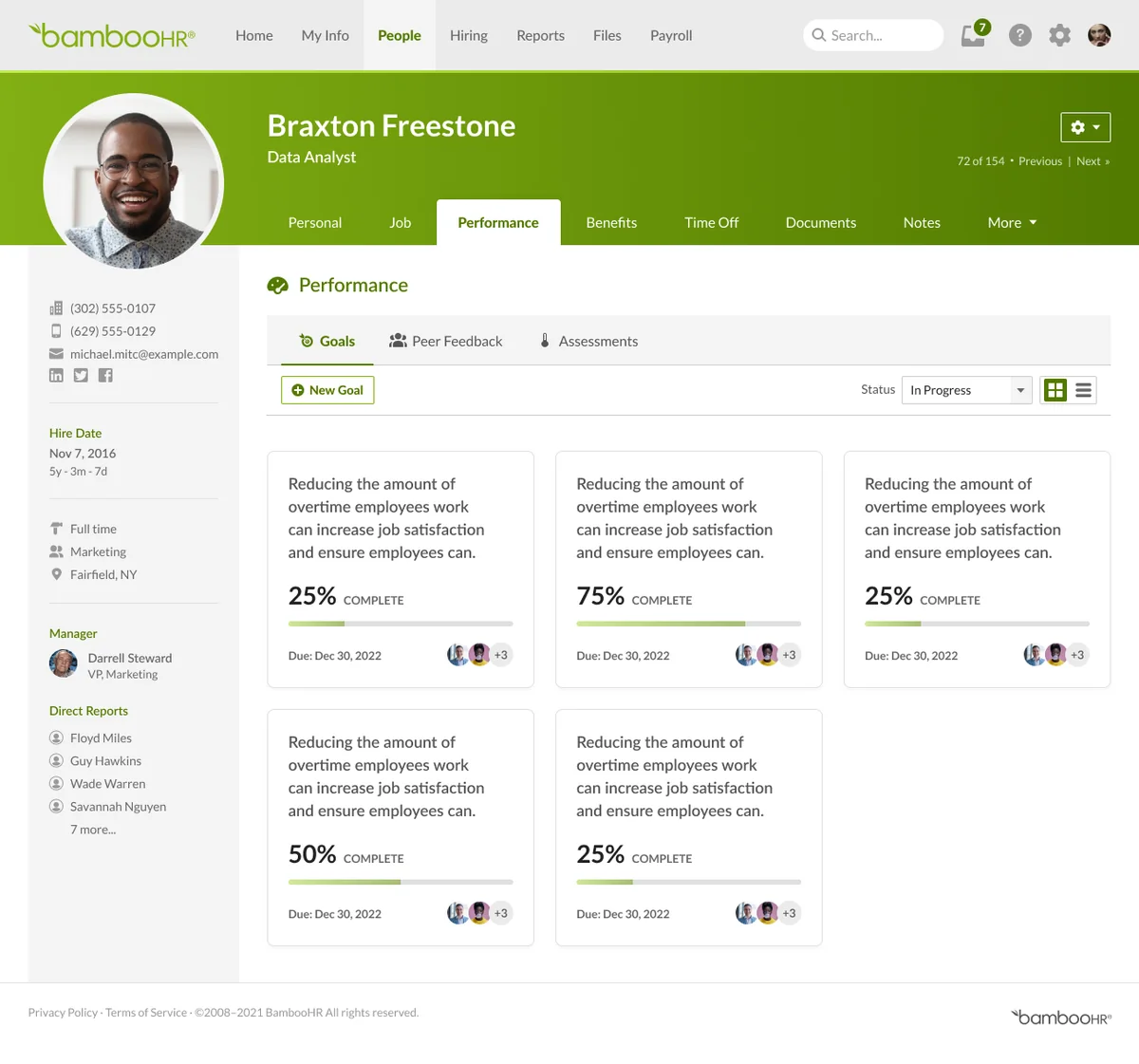
2022 — 2023BambooHR · Product design lead, AI team Lead designer on Performance Management — eliminated churn and lifted revenue in 5 months · modernized the Applicant Tracking System from recruiter feedback · led design for acquired-company integration into the BambooHR ecosystem · coached and mentored designers across products
2020 — 2024Founding designer · 7 products Verdi (AI co-pilot, ~$1M raised) · Finches (~$1M raised) · Dash-Fi · Splitzy · Olli · Butterfly · Aprenda (acquired)
2017 — 2020Kuali Senior product designer + product design manager · Protocols, Ready, performance & notifications · standardized UI across 6 product teams (the "Kuali UI Guild")
2015 — 2017Instructure · Bridge Lead designer on Program Authoring + Skill Assessments · retained 100% of an at-risk renewal cohort
BeforePushfit.tv, freelance, the slow climb Product, research, design, delivery — sometimes all at once
Available for

Co-founder conversations

Looking for a technical co-founder or a small founding team with a real problem in fintech, ops tooling, or AI-native productivity. If you're building something that could use a designer who can also operate, I want to hear from you.

Fractional design leadership

Open to one or two design-leader engagements while I figure out the next thing. Best fit: seed-to-Series-A teams that need a senior voice on product without committing to a full hire.