All work
Case study · BambooHR

Bringing an older performance product up to date.

BambooHR was losing Performance deals because customers couldn't customize their reviews. I led the redesign of reviews and goals. After launch, customization stopped being a top reason we lost deals, and Performance Management ARR grew from about $32M to $40M while I led design. I also led design on hiring and on bringing an acquired product into BambooHR.
Role
Product Design LeadHands-on, and managing designers
Company
BambooHRHR software for small and midsize businesses
Team
2 designers I managedPlus product and engineering partners
Timeline
Jul 2022 to Sep 2023Performance, hiring, Employee Community
The short version30-second read
Business need
Performance Management was an older product, and newer tools were better. Not being able to customize assessments was the top product reason we lost Performance deals.
Customer problem
Admins couldn't shape reviews to fit their company, goals were hard to read, and managers had no single view of their team.
Behavior change
Managers needed to track goals and run reviews inside BambooHR all year, without reaching for another tool.
Hypothesis
If goals showed progress at a glance and reviews came with proven questions, managers would use them all year.
Solution
Review cycles built on a question bank, goal cards with progress and milestones, and a goal status report.
Outcome
Customization stopped being a top reason we lost deals, and ARR grew from about $32M to $40M while I led design.
$40M
Performance Management ARR, up from about $32M while I led design
4
standard review questions that feed the performance reports
3
products I led design on: performance, hiring, Community
2
designers I managed and mentored
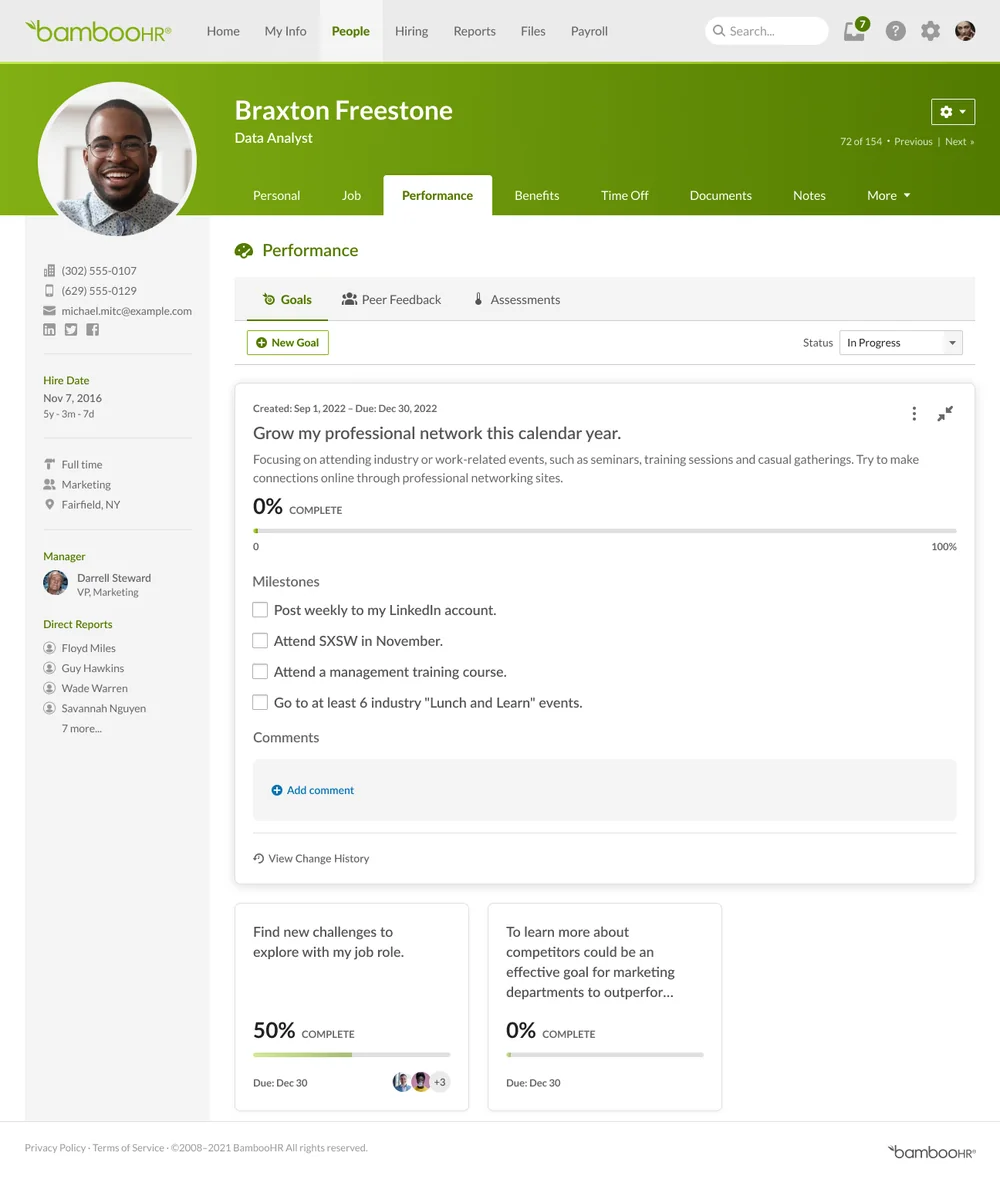
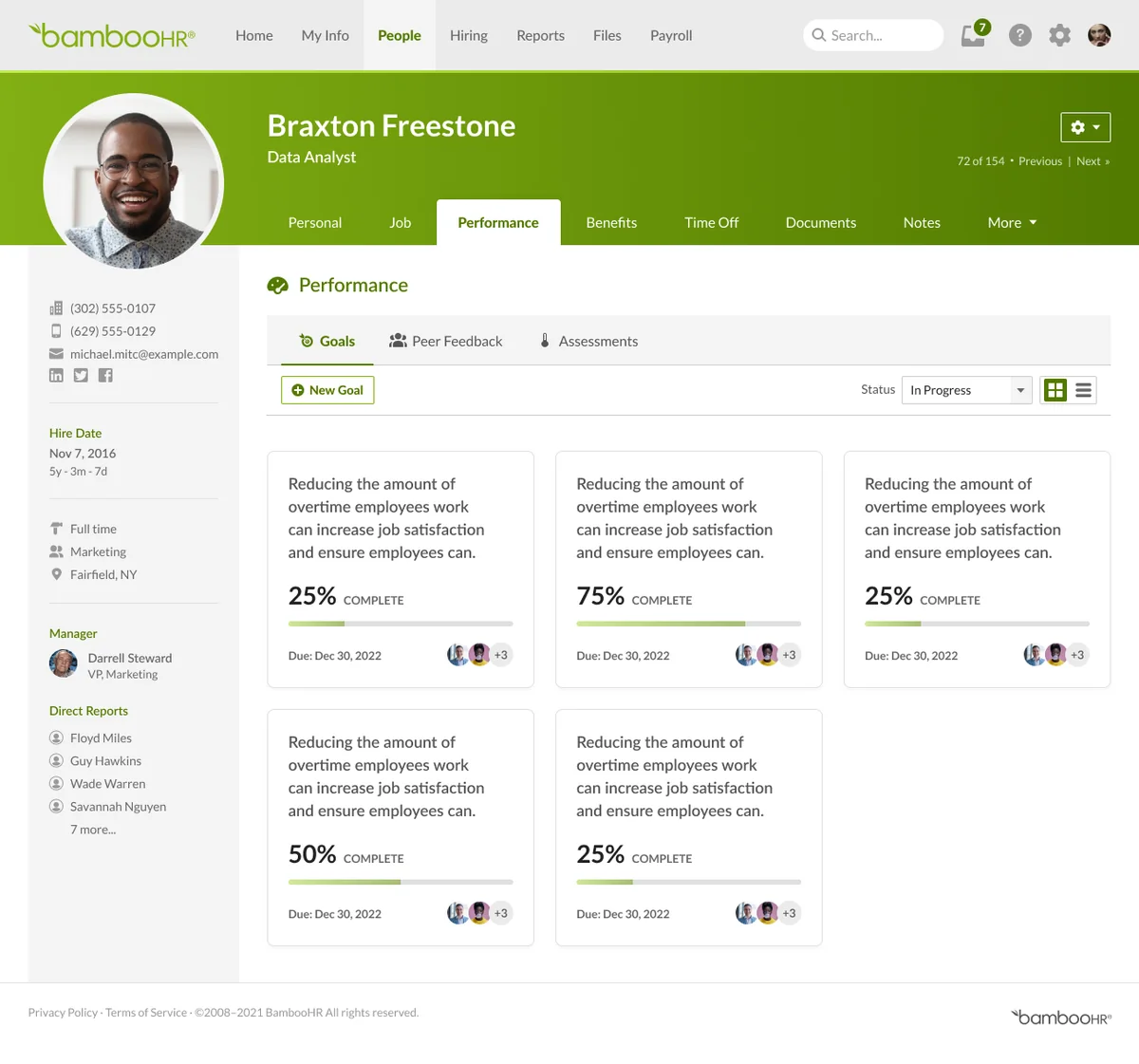
An employee's Performance tab in BambooHR, with goals shown as cards that each show percent complete and a due date
Goals as cards: progress and due date at a glance, on every employee's profile.

Business need

Why BambooHR cared.

BambooHR is the HR system for a lot of small and midsize companies. Performance Management was one of its paid products, and it was getting old.

Newer performance tools looked better and did more. Sales tracked why we lost deals, and the top product reason was assessment customization. Companies wanted reviews that fit how they work, and ours didn't bend.

A customer who outgrew our reviews could add another tool on top of BambooHR, or leave. Fixing that was worth real revenue.

Customer problem

What was getting in the way.

  • Admins couldn't customize assessments, the top product reason Performance deals were lost.
  • Goals sat in a plain list on each person's profile, with progress hard to read.
  • Managers had no single place to see how their whole team's goals were going.

Behavior change

What had to change.

Managers needed to check in on goals during the year, not just at review time. Admins needed to launch reviews quickly and ask questions that would tell them something useful.

Hypothesis

The bet.

If goals showed progress at a glance, managers would look at them more often. If reviews came ready with good questions, admins would run them more often. And if both fed clear reports, customers would have fewer reasons to buy a separate tool.

Solution

What I designed.

01

Reviews you can shape to fit your company.

Admins build review cycles from templates and a question bank, and pick when they start: on a fixed date or by each person's hire date. BambooHR's four standard questions, about engagement, contribution, best work, and feeling valued, come first because they feed the performance reports.

02

Freedom, with a warning where it costs you.

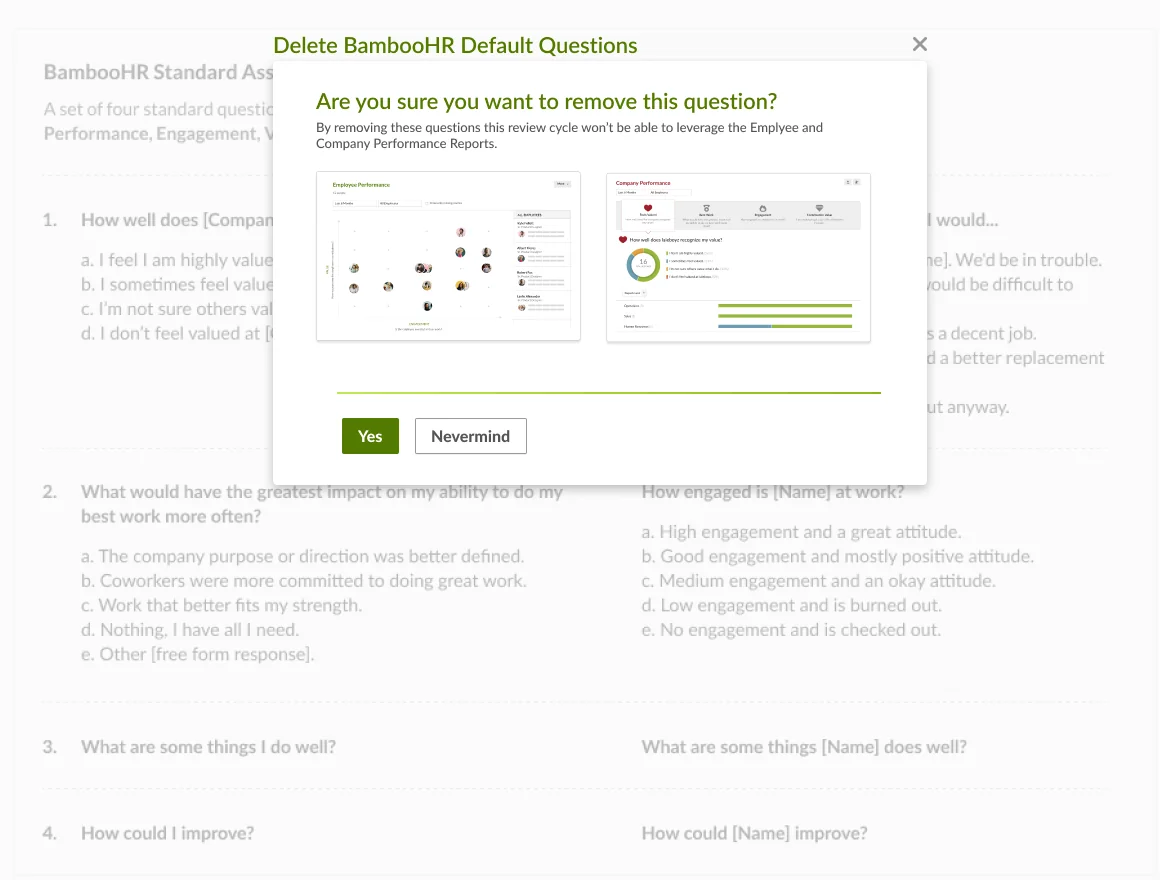
Admins can remove the standard questions. If they do, we show them exactly which reports stop working. And if they change their mind, one button puts the standard questions back. Customization never quietly breaks the data they rely on.

03

Goals you can read at a glance.

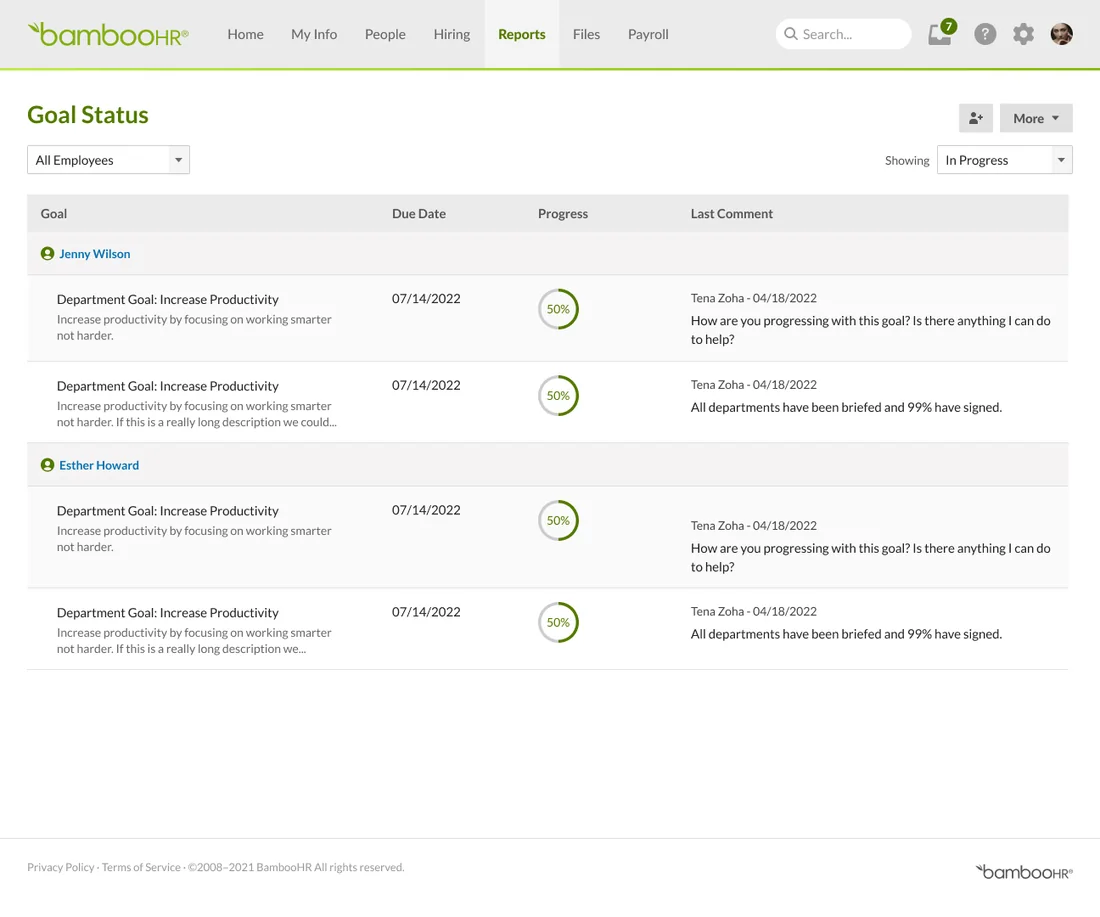
Each goal became a card showing percent complete, the due date, and who's involved. Open one and you see its milestones as a checklist, plus comments. Company goals use the same cards, so everyone can see what the business is aiming for. The goal status report puts every person's goals in one list, with descriptions cut to two lines so it scans.
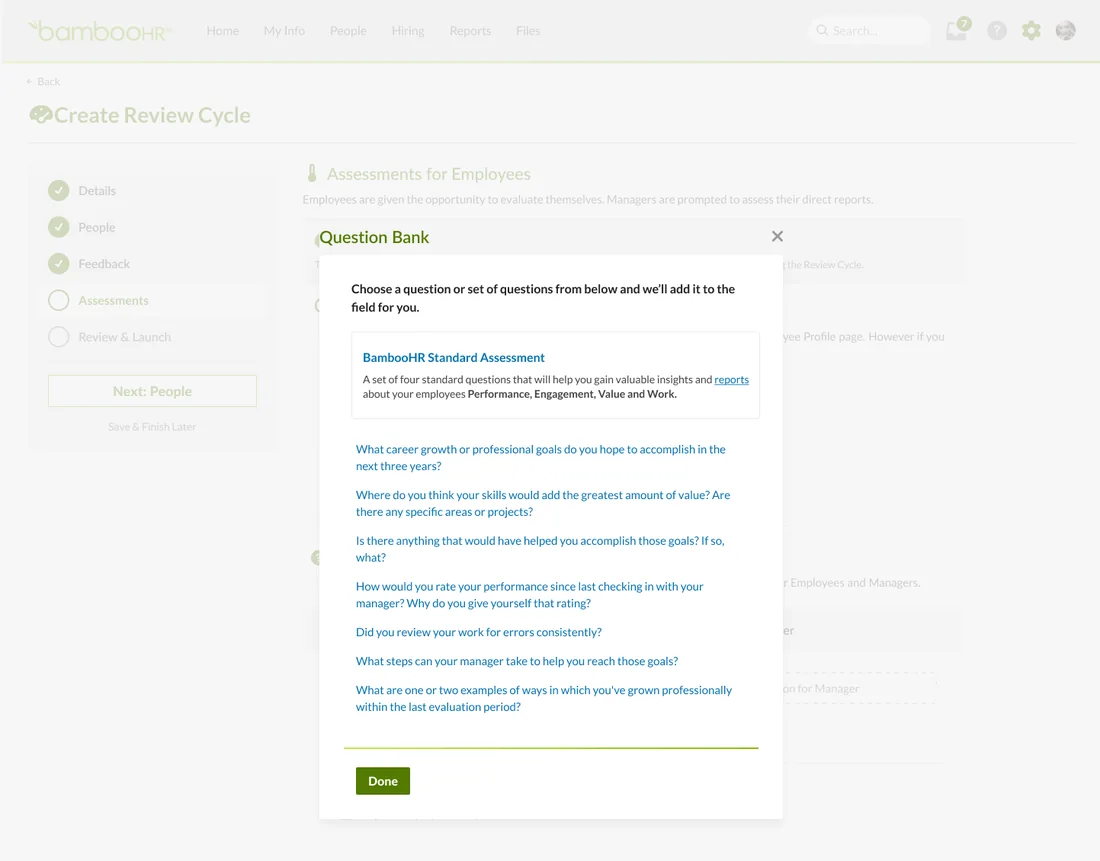
Question bank dialog with the BambooHR Standard Assessment at the top, followed by optional questions to add
The question bank: the standard four first, then questions to add.
A confirmation dialog warning that removing the standard questions means the review cycle can't use the Employee and Company Performance reports
Removing a standard question shows which reports you'll lose.
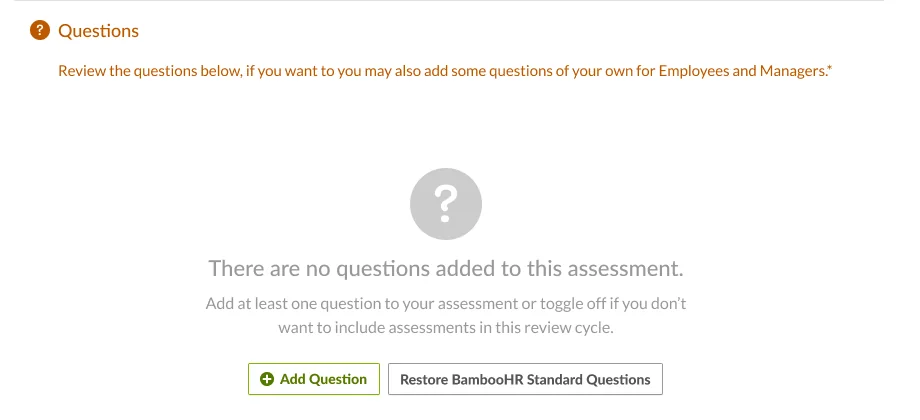
An empty assessment with two buttons: Add Question, and Restore BambooHR Standard Questions
And a way back: one button restores the standard questions.
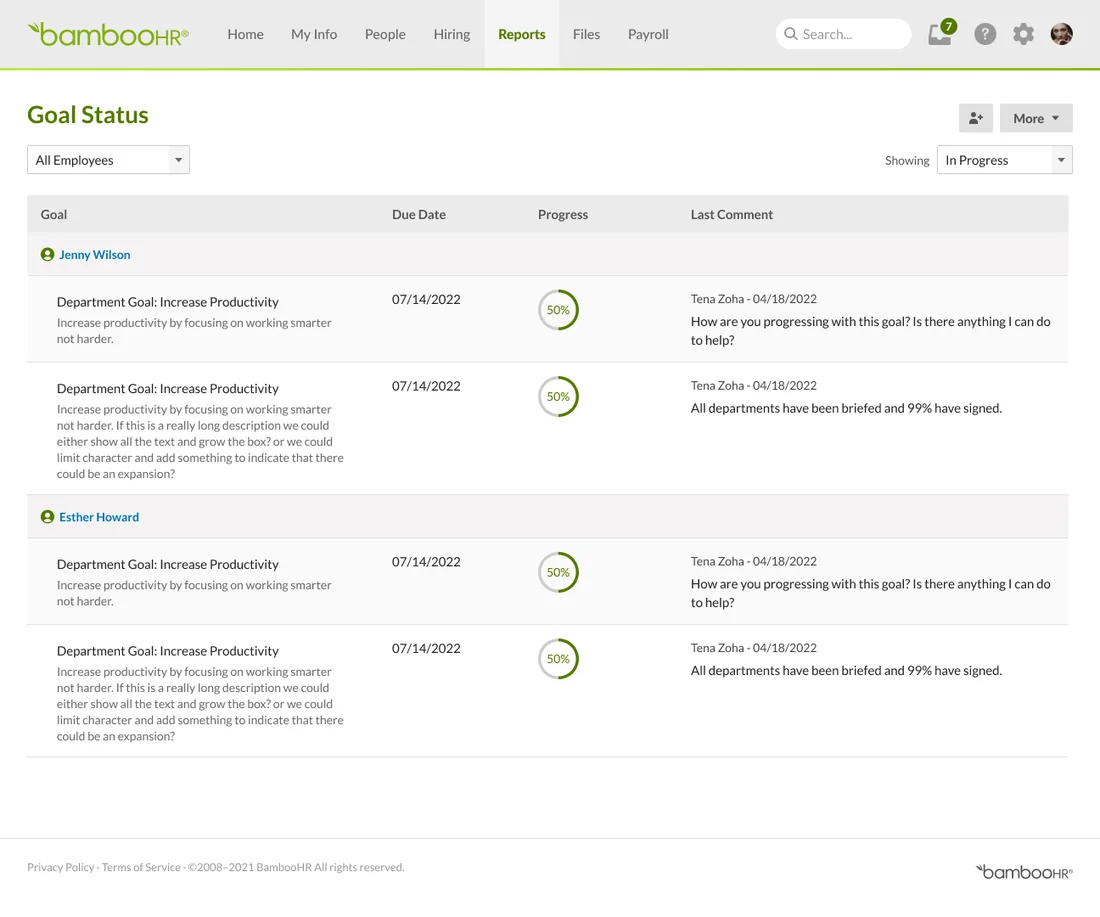
Goal status report showing full goal descriptions, which make some rows very tall
Full descriptions: some rows grow very tall.
The same goal status report with descriptions cut to two lines, so rows line up and the page is easier to scan
Two-line preview: rows line up and the page scans.
An open goal card with a progress bar, a checklist of milestones, and a comments area
An open goal: milestones and comments in one place.
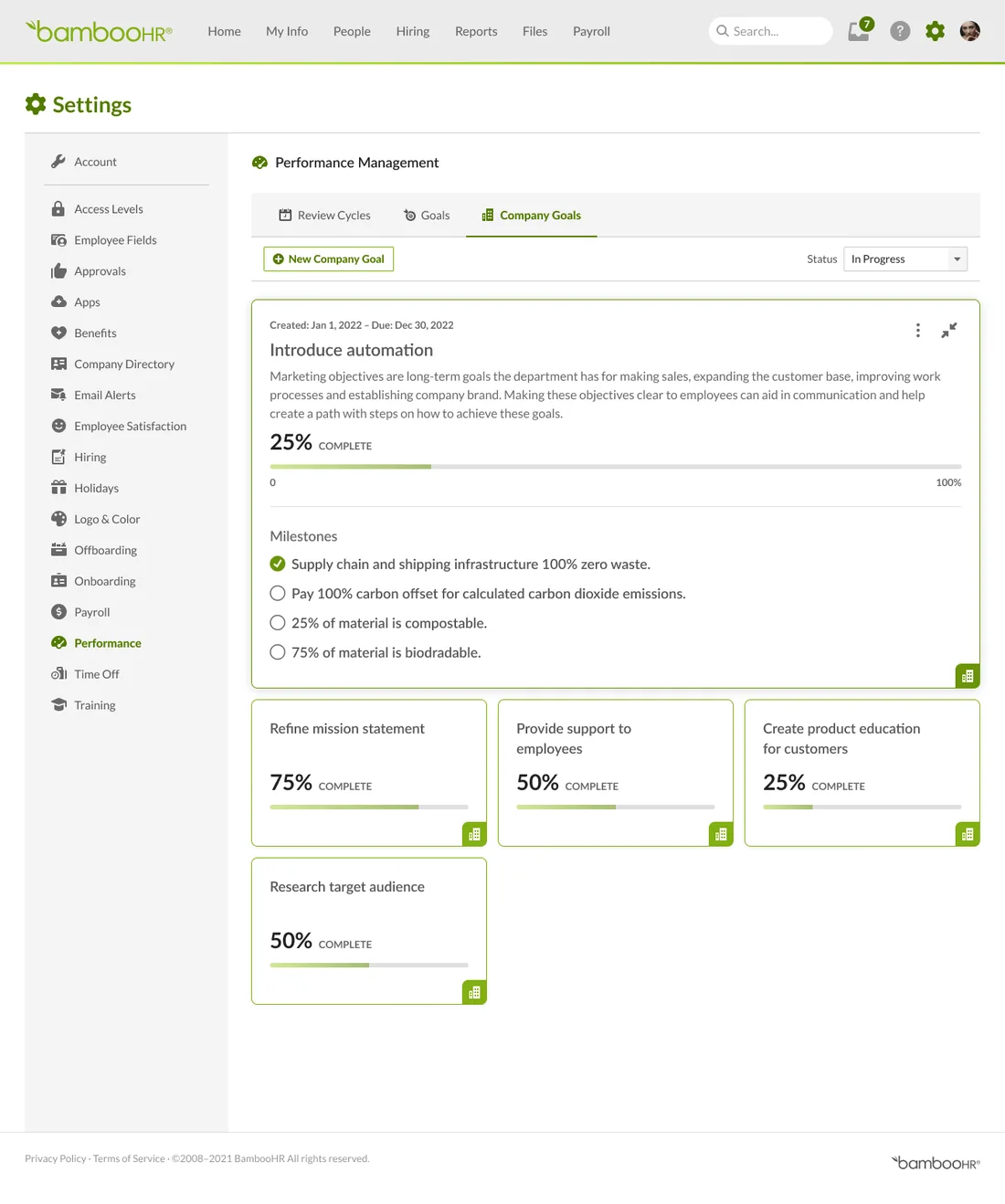
Company goals in Performance settings, shown as cards with progress, and one expanded with milestones
Company goals, on the same cards as personal goals.

Outcome

What happened.

After Review Cycles launched, fewer deals were lost over assessment customization, and fewer customers called it a deal breaker. The top reason we lost Performance deals stopped being the top reason.

Performance Management ARR grew from about $32M to $40M while I led its design. I managed and mentored two product designers along the way, and stayed hands-on from discovery to delivery.

Measurement

How I'd measure it.

Two numbers we tracked, and two I'd add to show managers kept using it after the sale.

What to trackResultWhy it matters
Performance Management ARR
About $32M to $40M
The business result, and the reason the product got investment.
Goals updated each month
Next to add
Shows whether managers check in during the year, which is the habit the redesign was built for.
Review cycles finished on time
Next to add
A review cycle that stalls is a reason to try another tool.
Deals lost over customization
Fell after launch
This was the problem we set out to fix, measured where it hurt: lost deals.

Also at BambooHR

Hiring, and the Employee Community.

I led design on two more products with the same problem: making older or newly acquired parts of BambooHR feel current and built in.

04

Hiring: job postings for remote and hybrid work.

Jobs could now be in-office, hybrid, or remote, and post to Indeed, Glassdoor, and ZipRecruiter. Job boards need a location even for remote jobs, so switching a job to remote marks the job boards step as needing attention and holds the save until it's fixed.

05

Employee Community: bringing an acquired product inside.

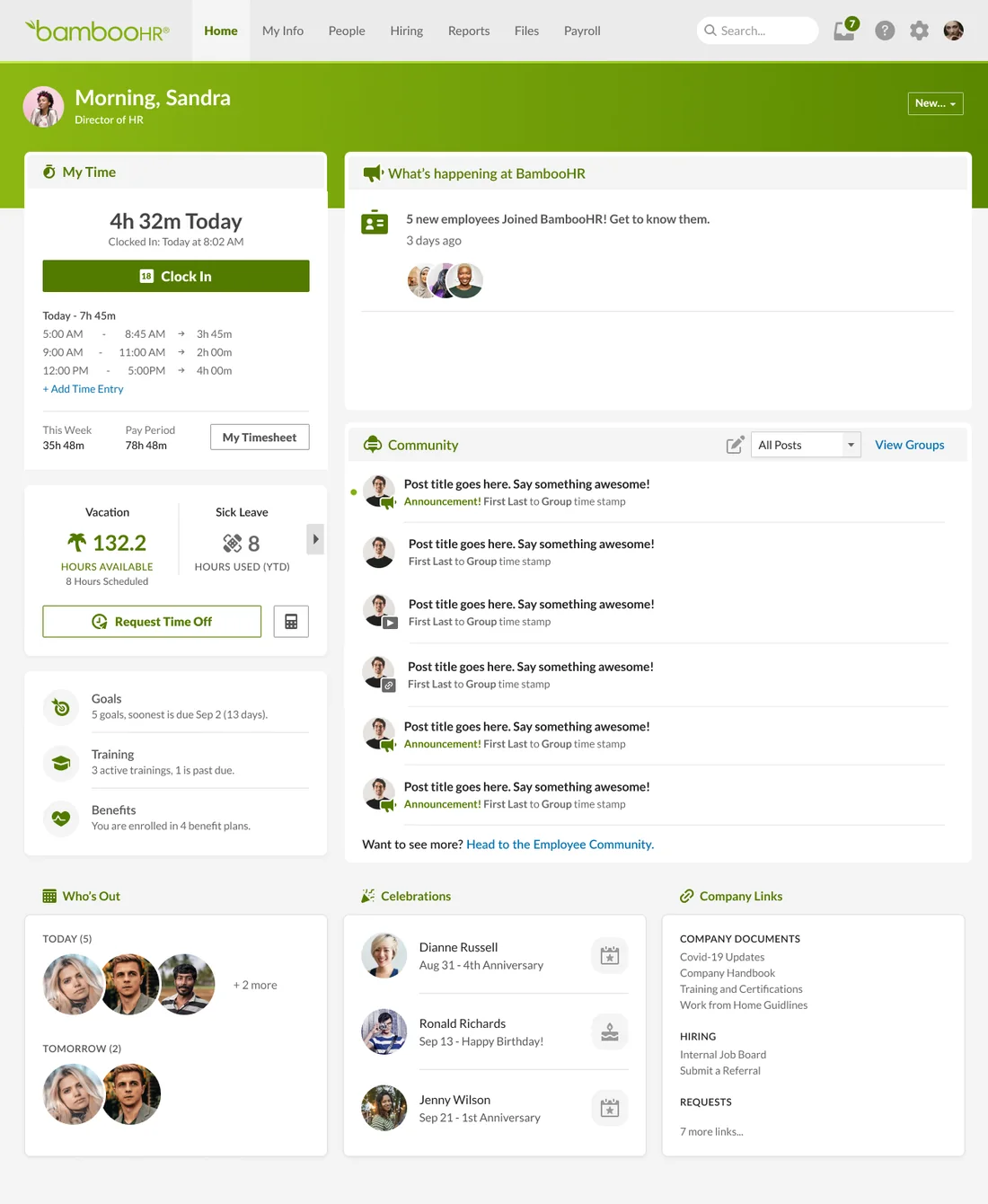
The Employee Community started as a separate app. I worked on making it feel like part of BambooHR: turned on with one button in settings, synced with employee data, shown on the new home page, and able to send announcements to specific departments or locations.
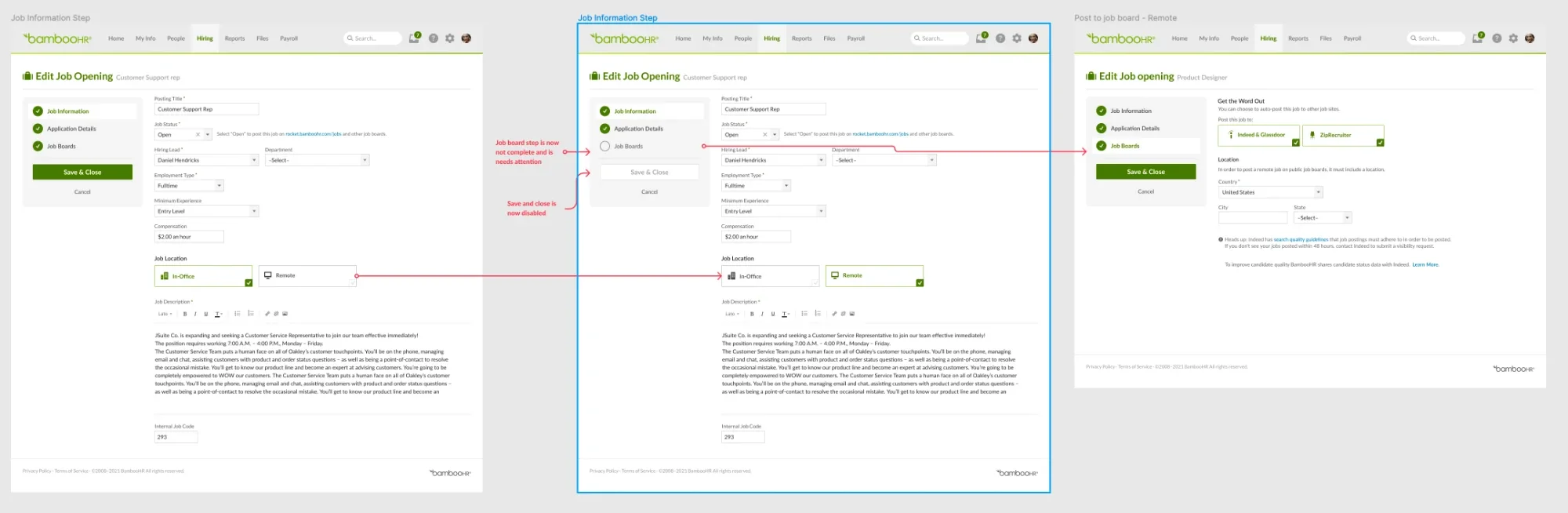
Three job posting screens with annotations: switching location to remote marks the job boards step incomplete and disables save until a location is added
Switching a job to remote: the job boards step flags itself, and save waits until it's fixed.
The BambooHR home page with time tracking, time off, goals, and a Community feed of posts and announcements
The new home page, with the Community feed built in.
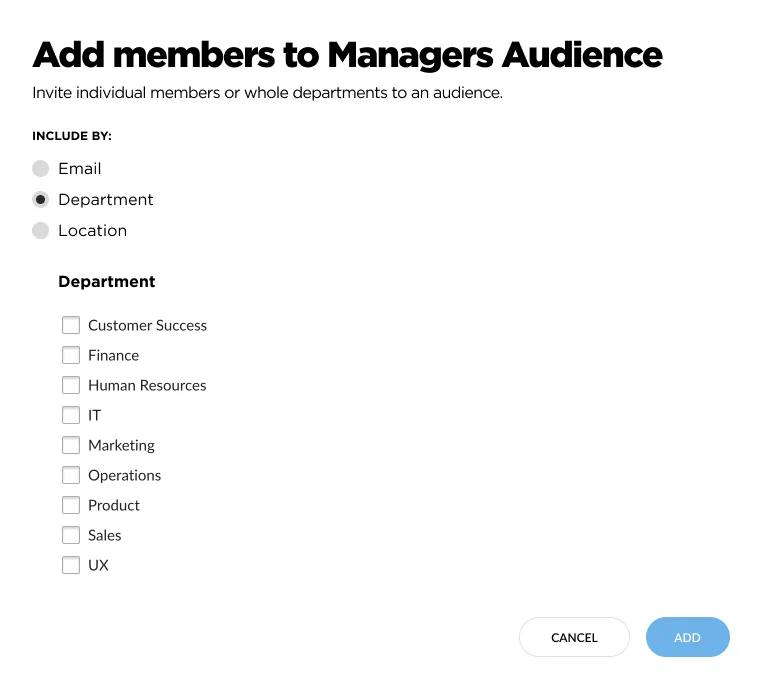
A dialog for adding members to an audience by email, department, or location
Audiences: announcements for one department or location.

Looking back

What I took from it.

Pick the habit metric early

ARR tells you the product is healthy. I'd also track how often managers update goals from launch, so we know which part of the design is earning it.

Acquisitions are a design job

Making an acquired product feel like home takes more than new colors. Settings, data, and where it shows up all have to feel like one product.

More work

Reporting for 700+ accounting firms at BILL, and onboarding farmworkers 60% faster at Sendola.